



Exclusive Interview in O-KOKU PLUS
“There are no winners in war. Everyone becomes a loser.” — That is what Afshin Badiee said.
Amid the tense situation in the Middle East, involving Iran, Israel, and the United States, Iranian players continue to hold their rackets. Travel by plane has been restricted by entry controls, and table tennis equipment has become more expensive. Participation in international events, including WTT tournaments, has also been pushed into a financially difficult situation. In such a harsh environment, the meaning of continuing to play table tennis for Noshad Alamiyan and Benyamin Faraji is clearly different from that for players in other countries.
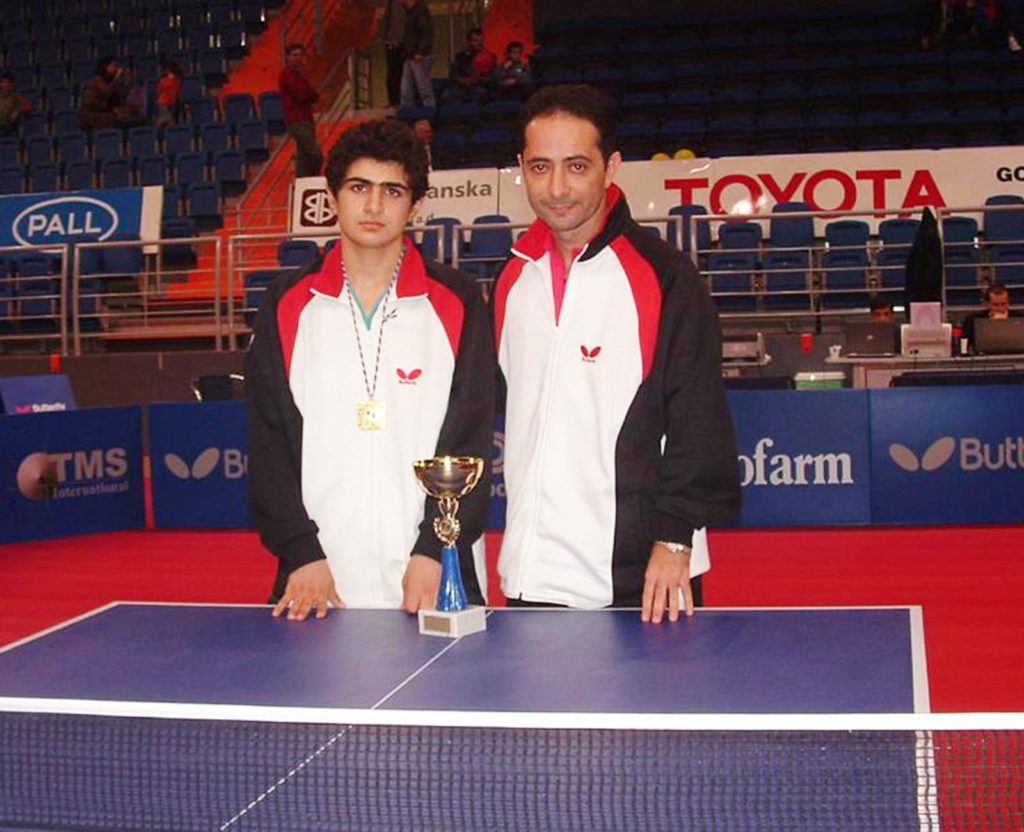
Afshin Badiee
Former Executive Managing Director of the Iran Table Tennis Association and former Secretary General of the Asian Table Tennis Union. As the head of development and promotion at the ATTU, he has overseen junior development camps and coaching courses across Asia. He has managed Iran’s national players, including Noshad Alamiyan and Benyamin Faraji, who are active on the world stage, since they were children.
*The photo above is from the 2006 World Cadet Challenge. Left: Noshad Alamiyan, right: Afshin Badiee
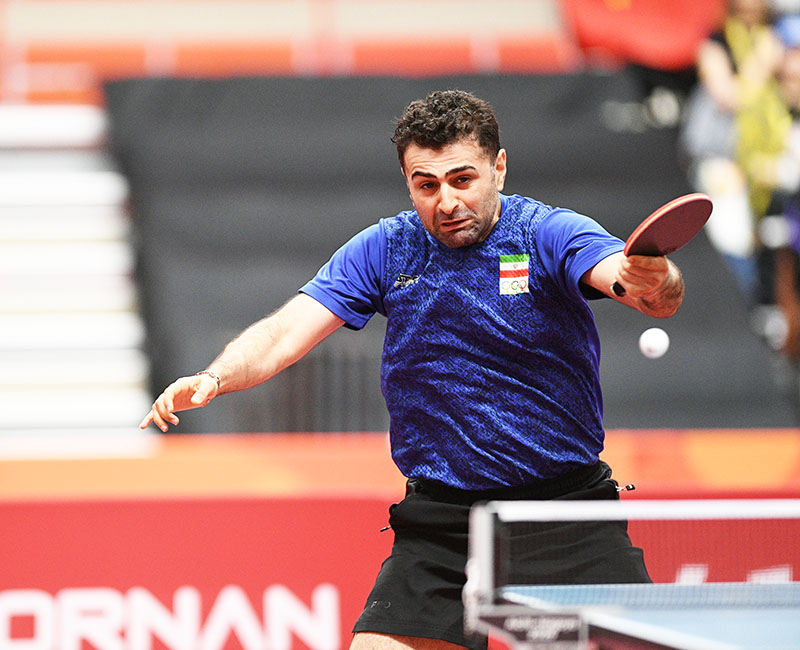
Noshad Alamiyan, who won a medal at the Asian Games, changed from a forehand-centered style to a backhand-led game
Interview by Noboru Konno
If you ask what the biggest key was, it was connecting Iran’s table tennis community to the “outside world”
●―This may be a simple question, but there are other Middle Eastern countries besides Iran, such as Saudi Arabia and Qatar. Still, at present, Iran seems to be the only country in the region with overwhelmingly outstanding results.
Afshin Yes, Iran. Kazakhstan in Central Asia has also developed a number of good players. But Iran also has the advantage of being the largest country in the Middle East, with a population of 90 million. In addition, Iran is one of the 16 founding countries of the ATTU (Asian Table Tennis Union). In other words, we have tradition, history, a large population, and talented people.
If you ask me what the biggest key was, it was connecting Iran’s table tennis community to the “outside world.” By connecting with the outside world, these talented players were able to gain opportunities to grow and make a leap forward.
●―I see, I understand. What I remember is the 2008 World Junior Championships. Noshad defeated Japan’s Kenta Matsudaira there to reach the quarter-finals. Matsudaira was the previous year’s champion.
Afshin That’s right.
●―At that time, I remember Noshad had a really skillful forehand drive. I also heard that coaches from North Korea and China were coaching Iranian players then.
Afshin Not China, North Korea.
●―Did Noshad also play in the French league during his junior years? He plays in France’s Pro A (first division) now, doesn’t he?
Afshin At that time, he was not yet playing in overseas leagues. He joined a European league several years later. That’s because I was the one who first signed him to a club in Germany.
There were personal family circumstances, and he was unable to join that club. But several years later, he signed with a team in France. And for the past few years, he has been based in France. He started in Pro B (second division), and now he is playing in Pro A (first division).
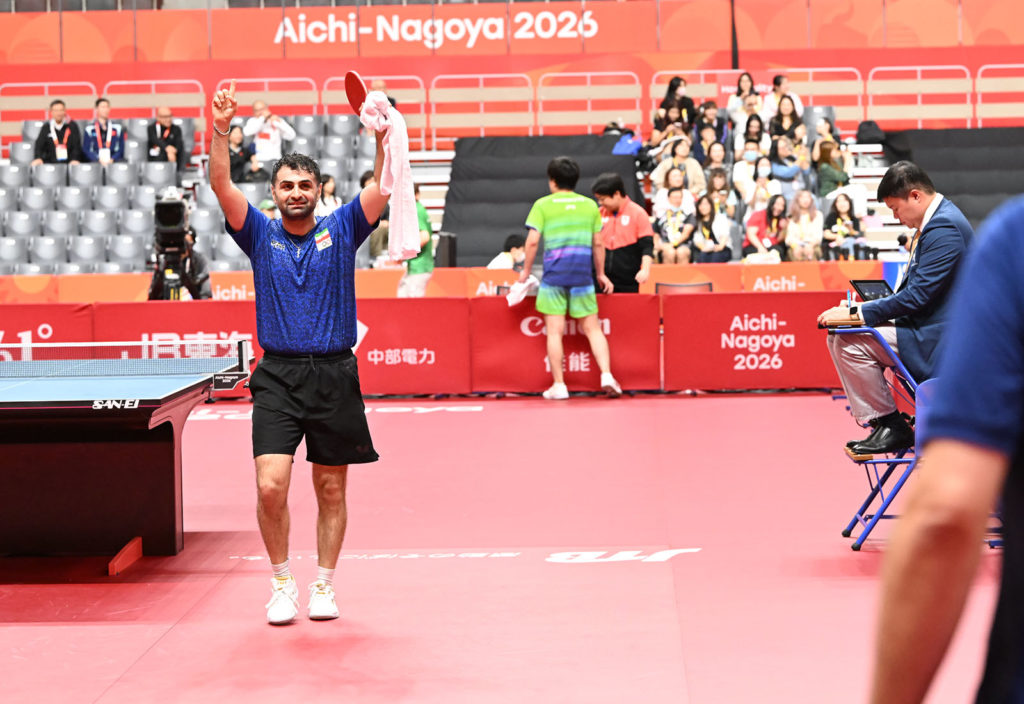
Noshad Alamiyan, who defeated Harimoto in the Singles quarter-finals at the Asian Games
Share


