



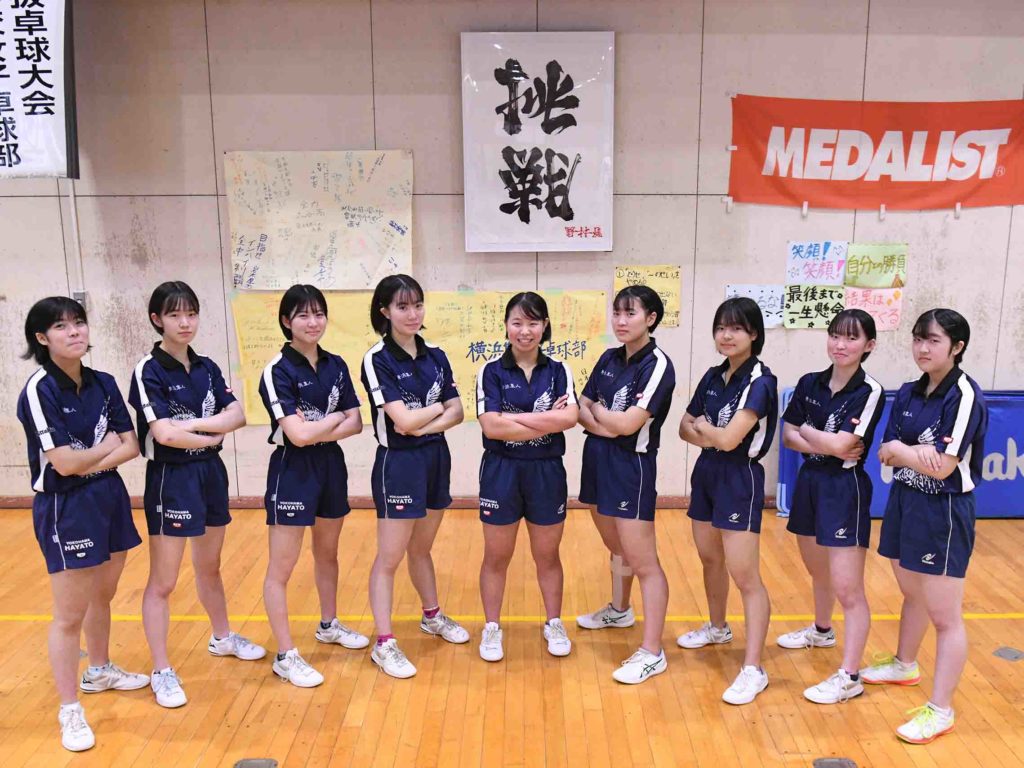
The Yokohama Hayato Junior and Senior High School girls’ table tennis club continues to perform at a high level, winning national titles in both the team and individual events. We went behind the scenes with a team spending its youth aiming for “personal bests from everyone.”
●Reporting: Takaomi Asano (O-KOKU Editorial Department)
[School DATE]
●Name: Otani Gakuen Educational Corporation Yokohama Hayato Junior and Senior High School
(YOKOHAMA HAYATO Junior & Senior High School)
●Address: 1-3-118 Akuwa Minami, Seya Ward, Yokohama City, Kanagawa Prefecture
●Founded: High School / 1977, Junior High School / 1979
●Programs (High School): General Course, International Studies Course
●Girls’ table tennis club membership (as of October 10)
[High School] 4 third-years, 2 second-years, 3 first-years [Junior High School] 4 third-years, 8 second-years, 6 first-years
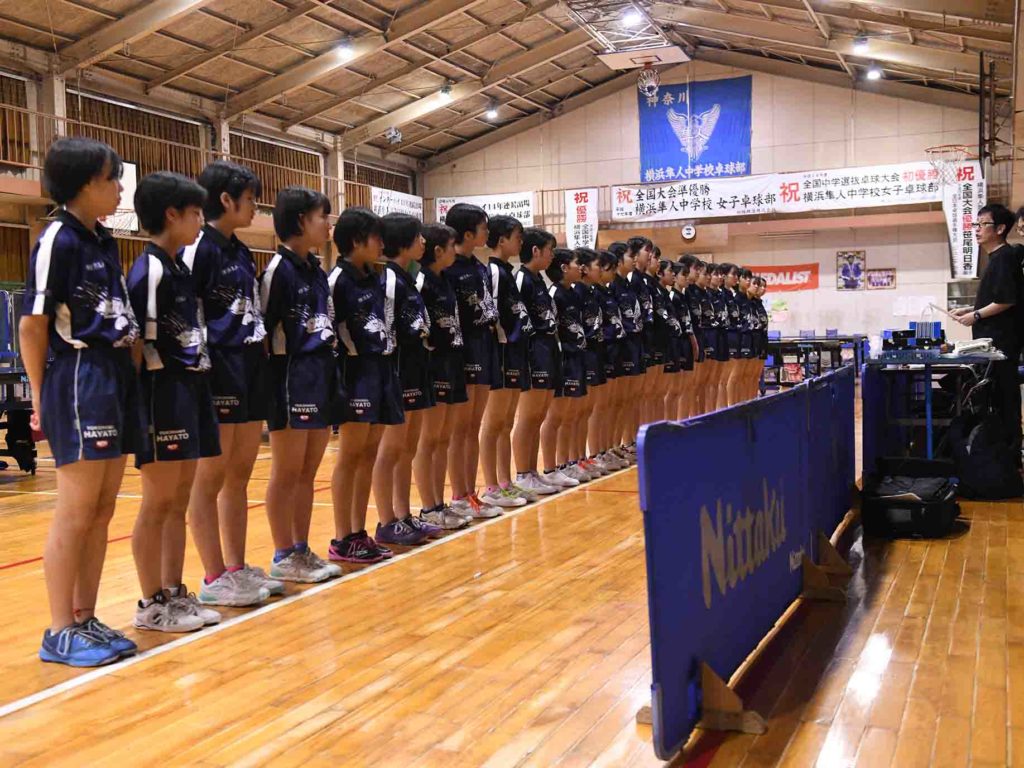
The junior high school won the team title in both spring and summer, while the high school finished runner-up twice at the National Intercollegiate Championships selection. A powerhouse at the very top level nationwide
Yokohama Hayato Junior and Senior High School stands in Seya Ward, on the western edge of Yokohama City, Kanagawa Prefecture. The high school was established in 1977, and the junior high followed two years later. It began as a boys’ school, but became coeducational in 1985, and now about 2,000 students attend the junior and senior high schools combined.
The girls’ table tennis club had players such as Misaki Nakajima and Makiko Fujita, both of whom won the All Japan Cadet Doubles in elementary school, enroll in 2003, and then finished runner-up in the 2005 All Japan Junior High Team Event. In 2006, the high school made its first appearance in the Inter-High School Team Event.
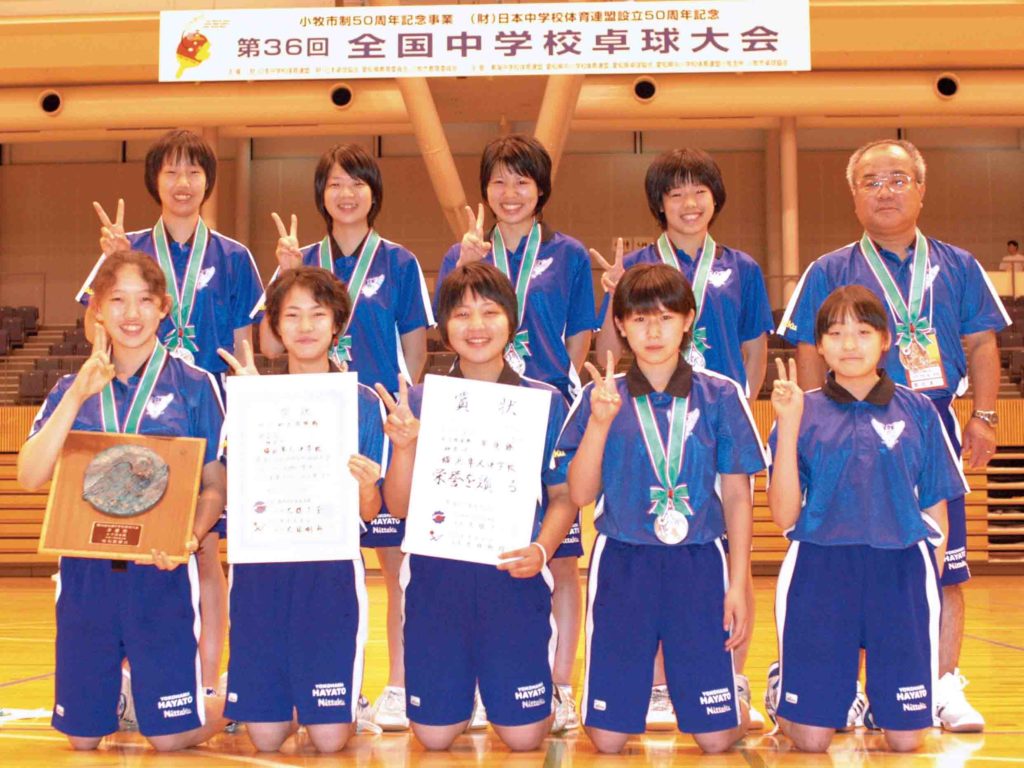
Runner-up in the 2005 All Japan Junior High Team Event. The first national medal in Yokohama Hayato history
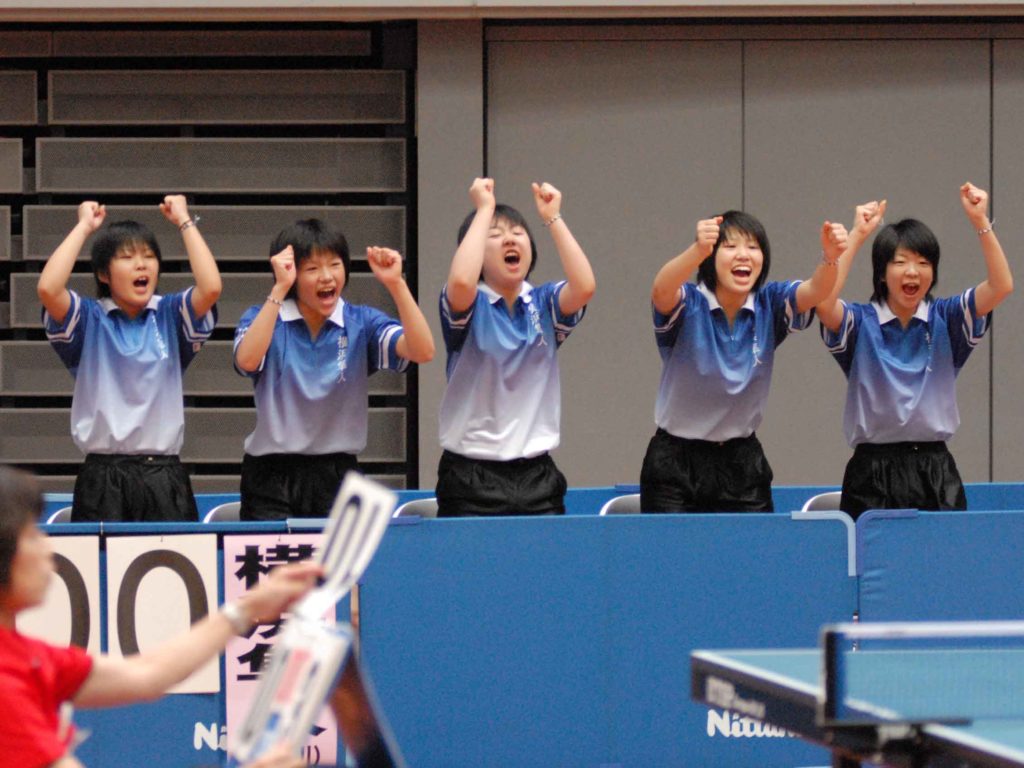
First appearance in the 2006 Inter-High School Team Event. From that year through 2024, they qualified for 18 consecutive tournaments
When Asuka Sasao, then a second-year high school student, brought Yokohama Hayato its first-ever national title at the All Japan Junior Championships in January 2017, the junior high team also claimed its first title at the Junior High Selection in March of the same year. The high school, meanwhile, has continued to shine nationally, reaching the quarter-finals eight times in the Inter-High School Team Event and finishing runner-up at the 2023 and 2024 selection tournaments.
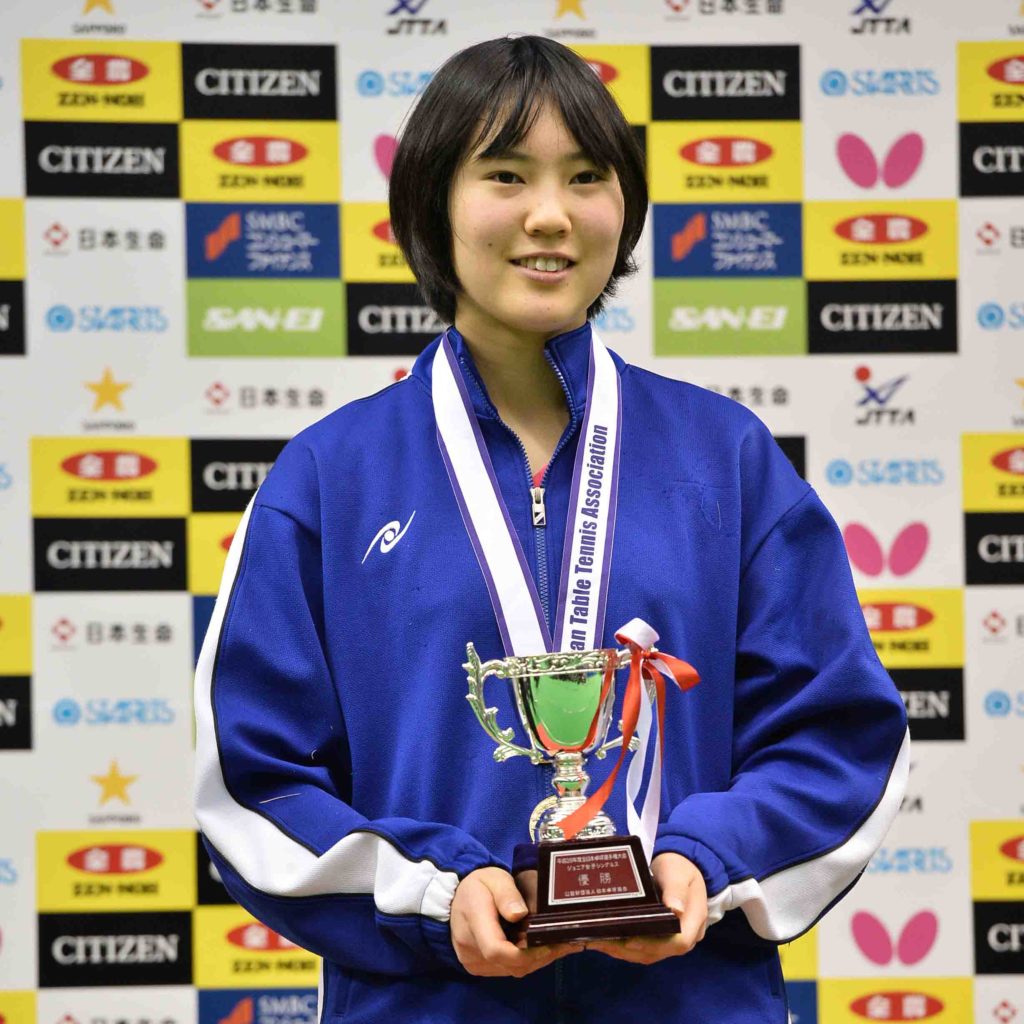
2017 All Japan: Asuka Sasao wins the All Japan Junior title. She defeats the likes of Miyu Kato and Miyu Nagasaki to stand atop the podium
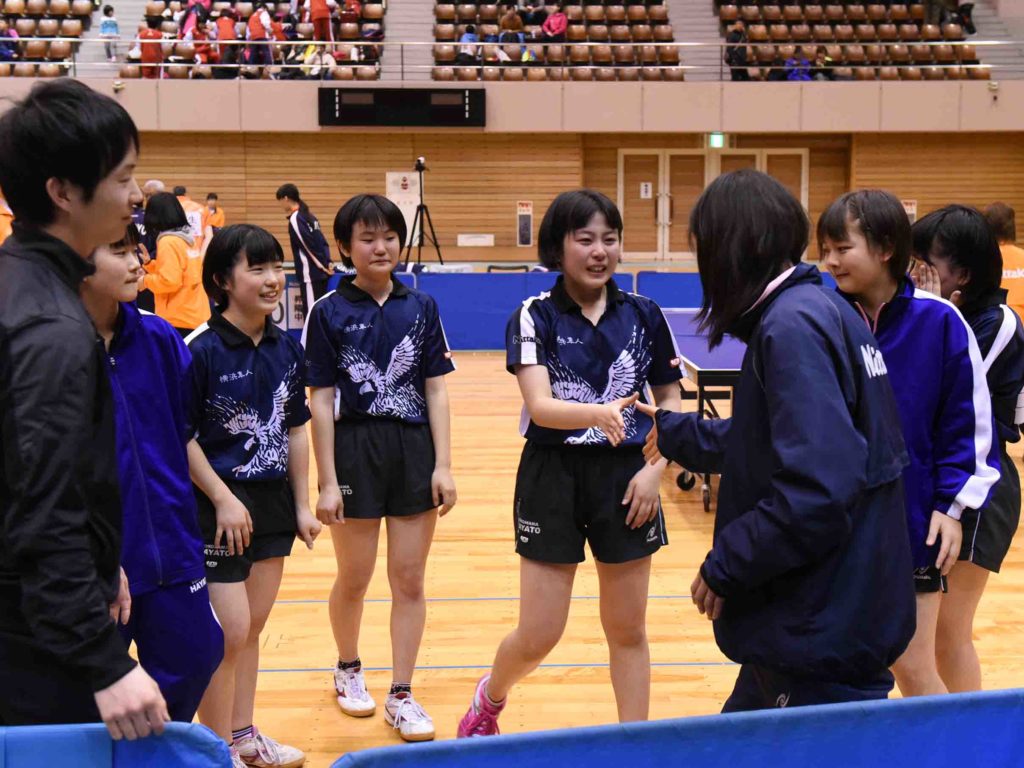
First triumph at the 2017 Junior High Selection. Their first team national title, following in “Senpai Sasao’s” footsteps
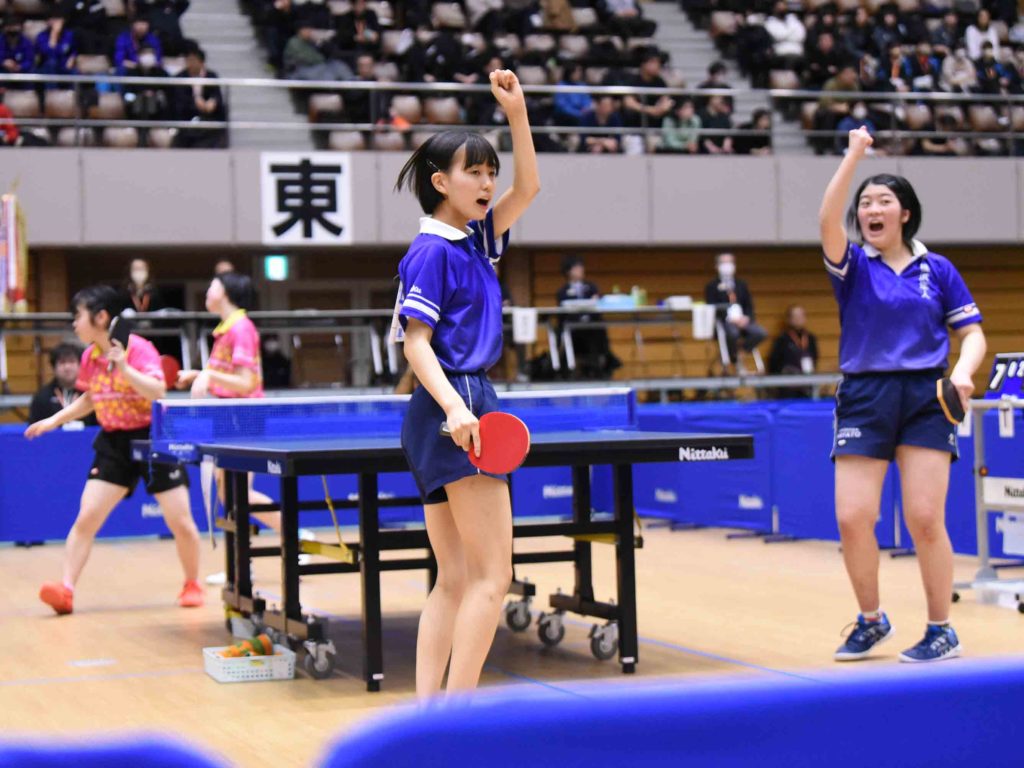
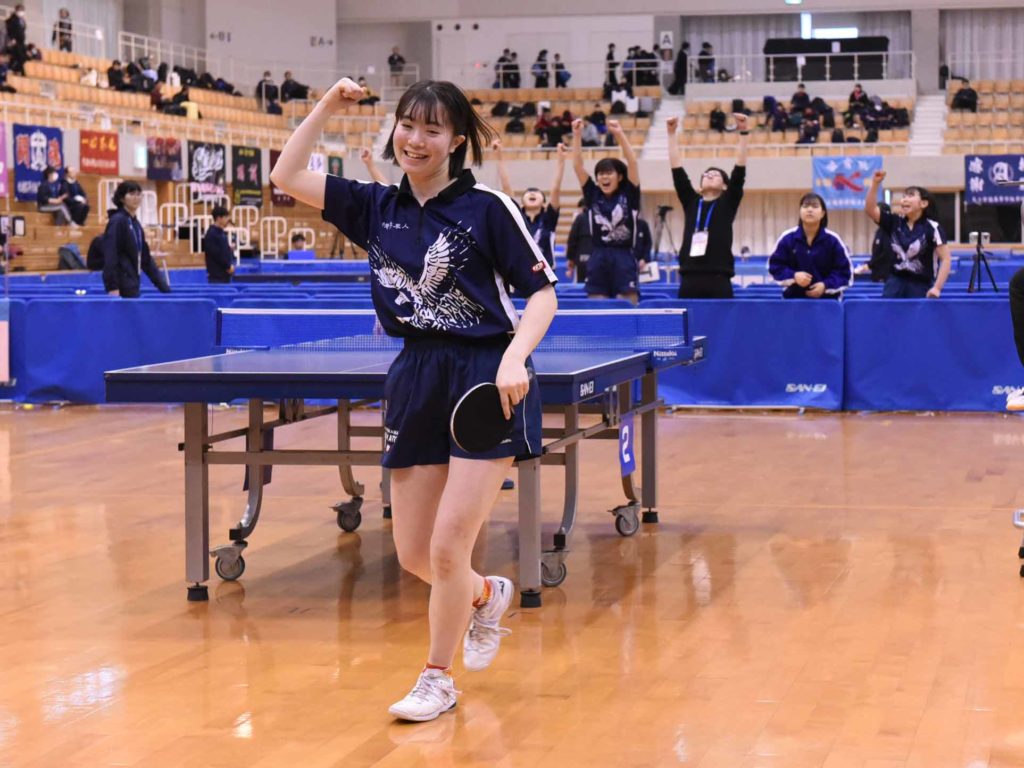
Runner-up at the 2024 and 2025 High School Selection for two straight years. In March 2024, they reached the Final for the first time at the high school selection, and the following year they fought through a string of tight matches to finish runner-up again
This March, they captured their second crown at the junior high selection, and in August’s All Japan Junior High Team Event they won the Final, which had eluded them four times before, and claimed their long-awaited first title. They completed a superb spring-summer double.
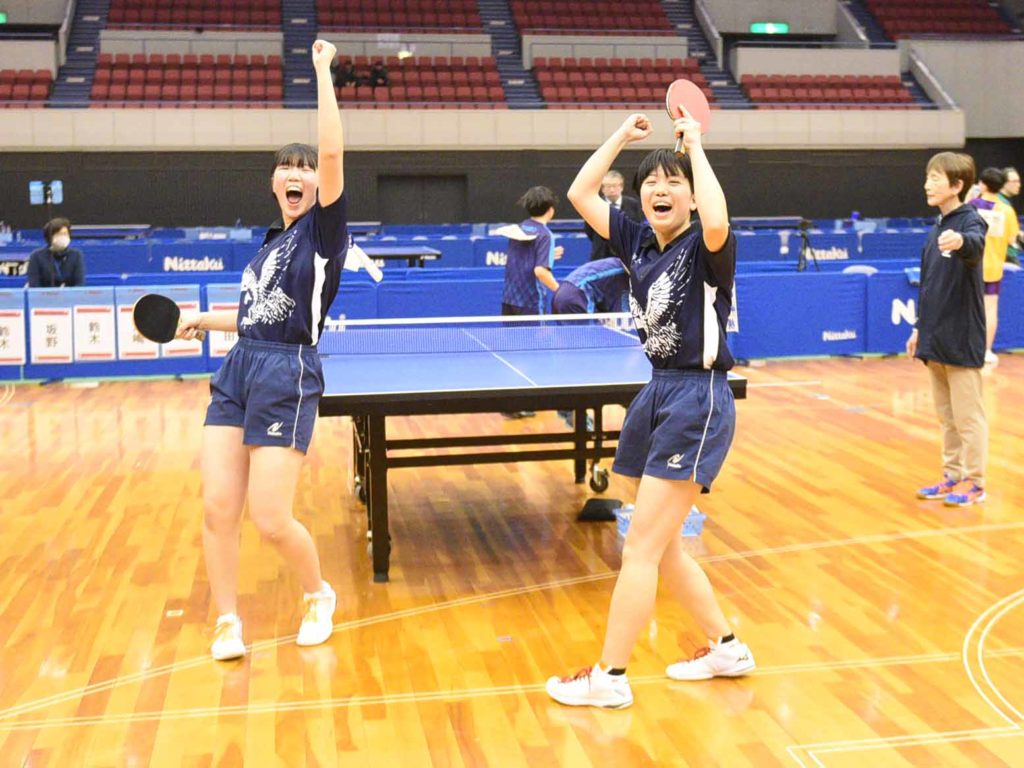
2026: their first junior high selection title in nine years. They won their second championship after playing six matches and dropping only one point
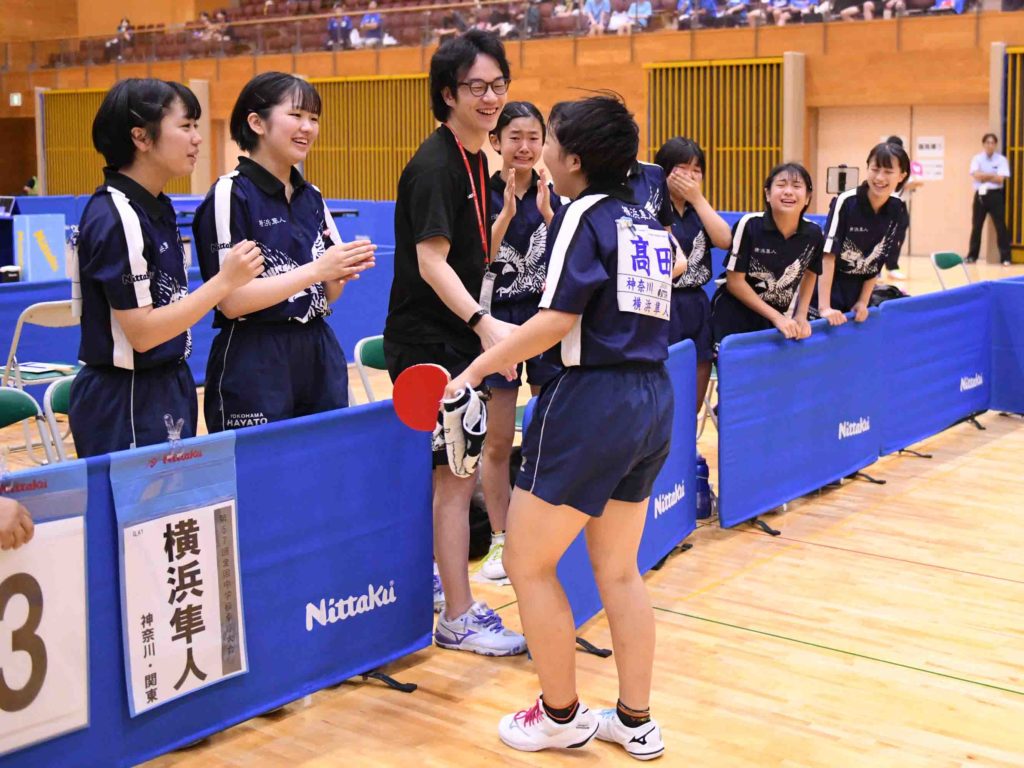
First victory in the All Japan Junior High Team Event. A dramatic title run, winning three straight matches 3-2 from the Quarter-final through the Final
Led by Sasao, who also won a title at the All Japan Corporate Championships, the school has produced many graduates who continue to excel at the university and corporate levels after graduation. It is known as a powerhouse at the very top level nationwide.
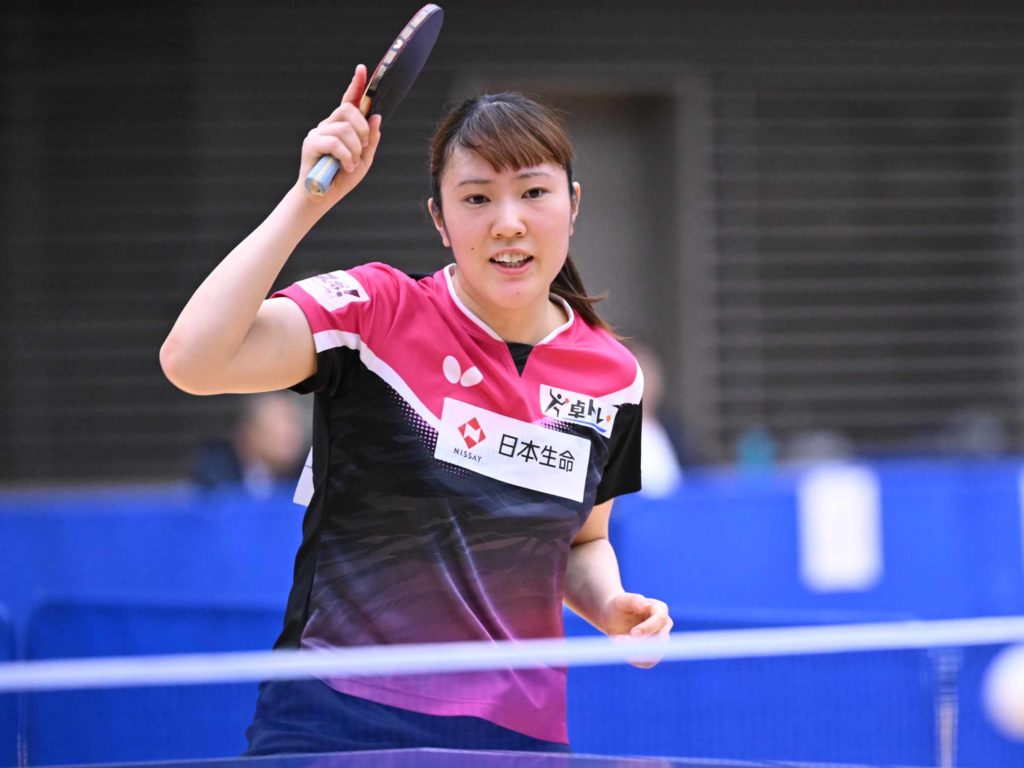
〈Asuka Sasao〉 (Graduated in 2017 / current club: Nippon Life) 2017 All Japan Junior champion, 2024 All Japan Corporate champion, 2025 All Japan women’s doubles runner-up
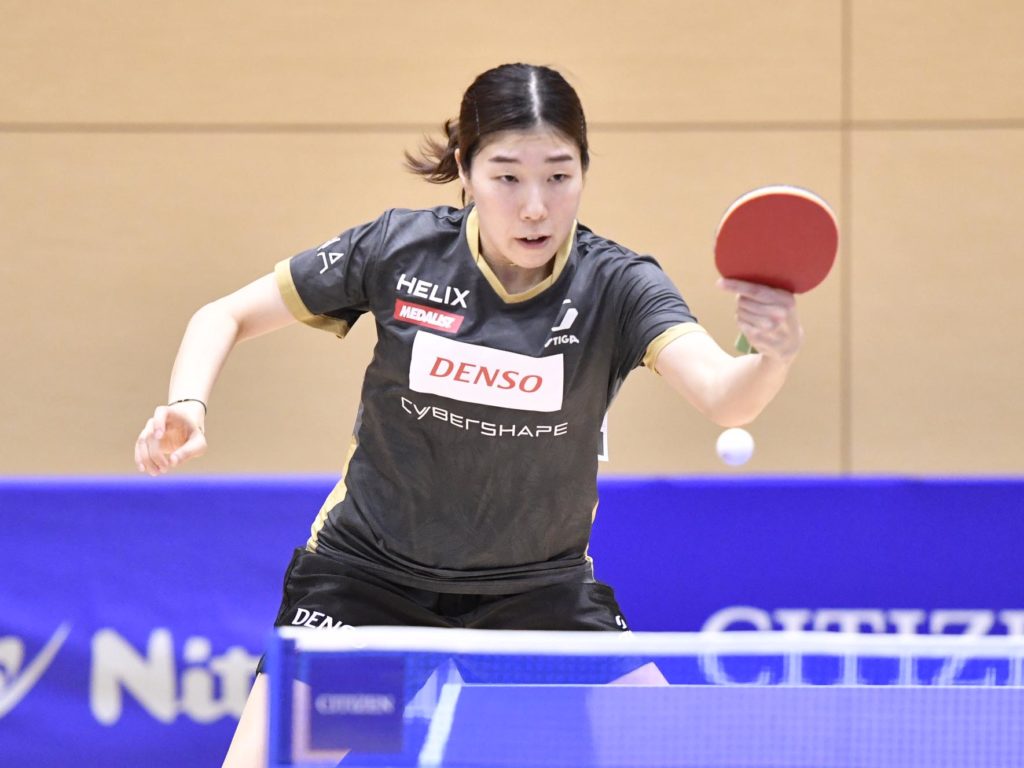
〈Takako Nagao〉 (Graduated in 2013 / current club: Denso) 2017 All Japan women’s doubles champion, 2026 All Japan Corporate champion
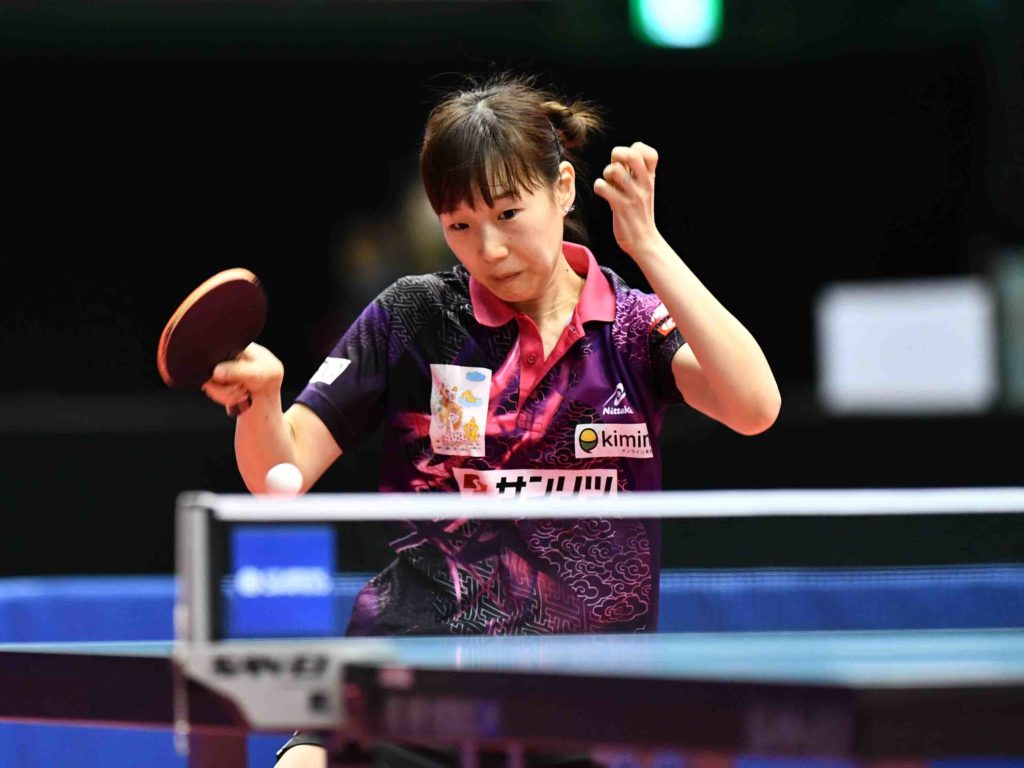
〈Misaki Nakajima〉 (Graduated in 2008 / former club: Sanritsu) 2016 All Japan women’s doubles champion
The coaches talk about “Hayato’s aesthetics”
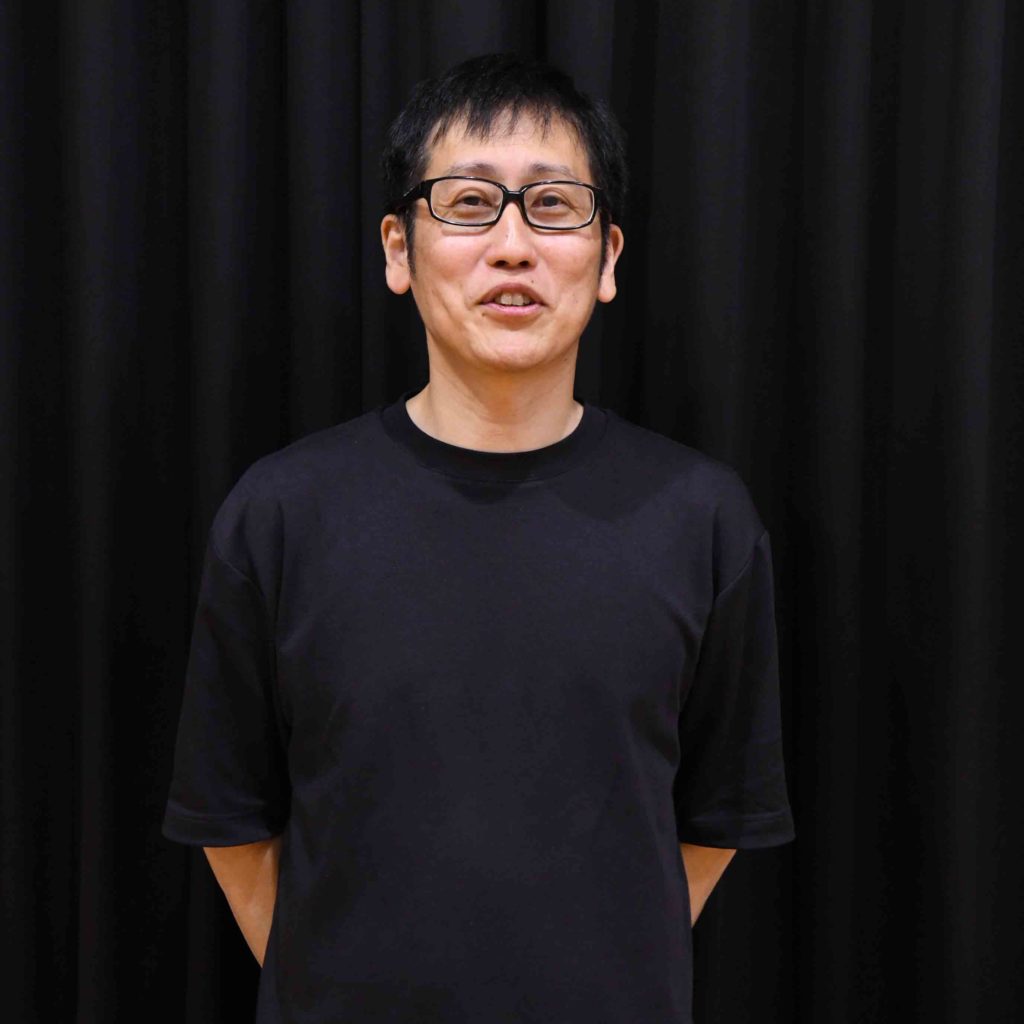
High school: Head coach Masahiro Kishi. From Shimane Prefecture. He went on from Meisei High School to Waseda University, worked at a publishing company, and has been a teacher at Yokohama Hayato Junior and Senior High School since 2006. He has served as the high school head coach since autumn 2011.
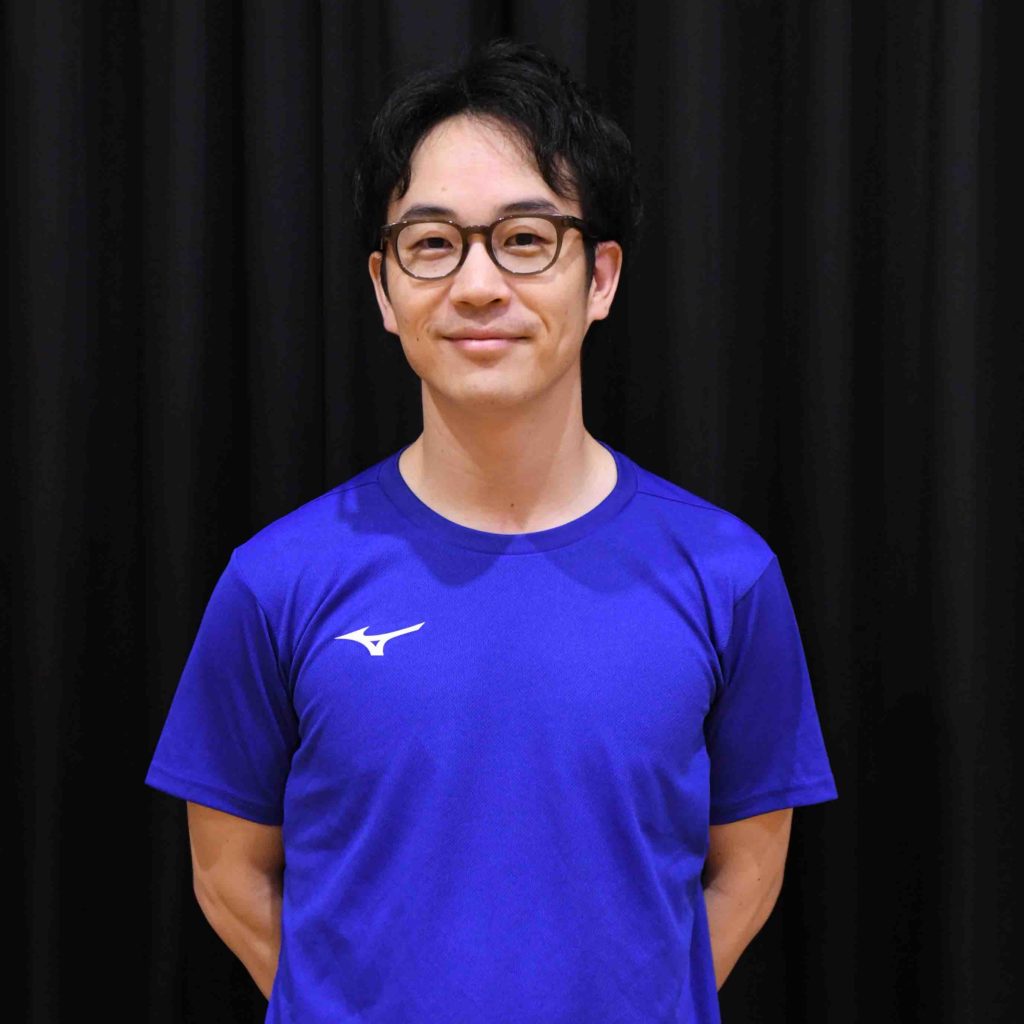
Junior high: Head coach Takuya Nakama. From Tokyo. After graduating from Meisei University Nakano Hachioji High School and Waseda University, he joined Yokohama Hayato Junior and Senior High School as a teacher in 2014 straight out of university. He has served as the junior high head coach since 2019.
[Both players and advisers share the basic principle of “everyone together”]
Yokohama Hayato brought in Hideyuki Kobayashi, who had also coached at Nissan Motor, as an external coach, and serious strengthening began. Until his death in 2021, Kobayashi was deeply involved in guiding the team for many years as general manager.
At present, Masahiro Kishi serves as the high school coach and Takuya Nakama as the junior high coach, but according to Kishi, “both of them feel more like advisers than coaches.” In addition, there are two other teachers, Tokie Okoshi and Yo Kato, for a total of four advisers. Together, they decide on training and strengthening policies, provide instruction, and handle administrative work. There is no pyramid-like division of roles; the four of them are responsible for the entire junior high and high school program.
This “everyone together” approach is one of Yokohama Hayato’s defining traits. From first-year junior high students to third-year high school students, everyone spends time in the same practice hall, working toward the same goals. Tasks such as set-up and clean-up are also handled by everyone, regardless of grade or ability. In that way, the team grows stronger as a unit and strives for “personal bests from everyone.”
Kishi also explains the value of having players aged 12 to 18 “think together and work together”:
“There are big differences between a first-year junior high student and a third-year high school student in many ways. If there’s that much of an age gap, it’s only natural that there will be things they can’t understand about each other, or things they don’t know.
In that situation, the experience of thinking about how to get your point across to the other person, or trying to understand them, should be incredibly educational. I think that’s also a major advantage of a unified junior-high-through-high-school system.”
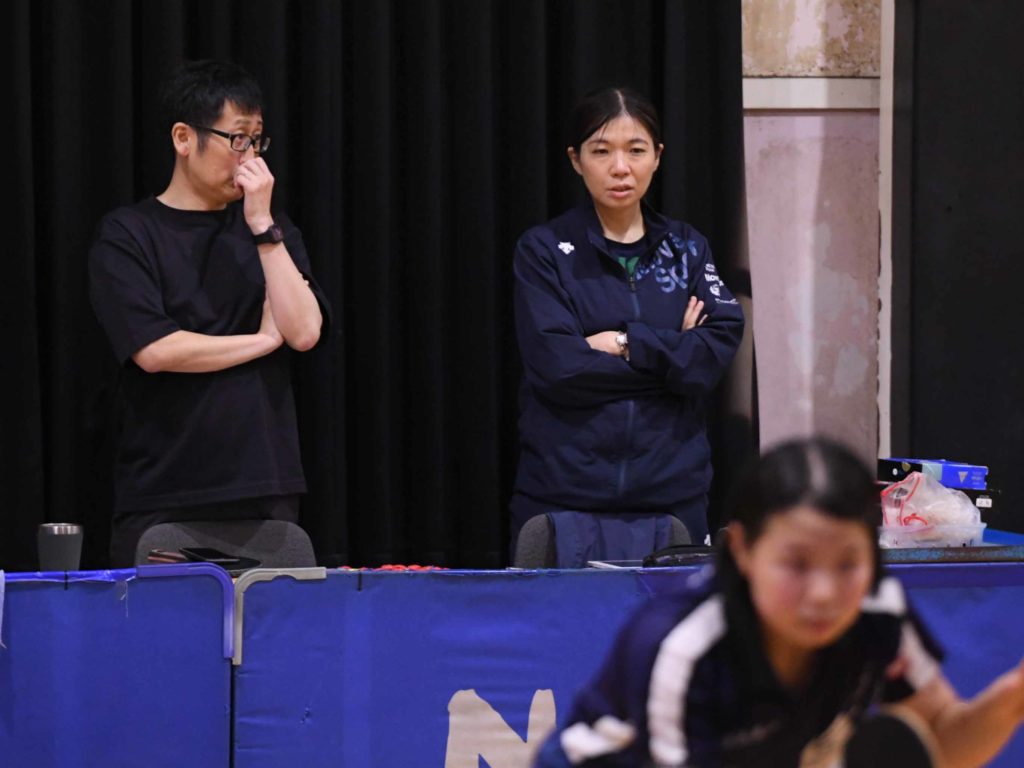
Tokie Okoshi, who has long worked alongside Kishi as a teacher at Yokohama Hayato (right). She previously served as junior high head coach, including during the team’s first Junior High Selection title
[“Everything is an opportunity to grow.” Even outside table tennis, this is a club]
Club activities are another theme, but at Yokohama Hayato, “club activities” are not limited to table tennis. School life, including classes, and daily life are all considered part of club activities, and the idea is that putting your all into everything leads to growth.
“Club activities these days tend to be associated with negative aspects, but I myself gained a lot through club activities, and I know the positive side of them.
'Give your all to both classes and club activities' may sound tough. But every moment of daily life is an opportunity to grow, and that all counts as part of ‘club activities.’ That way of thinking has become part of Hayato’s identity.
There are junior highs and high schools now where students can work in a more professional environment, and with so many different values and options, this is an age where it’s hard to know what the right answer is. That’s why I feel it’s important to take pride in our own way of doing things, and to believe in it” (Kishi).
Always giving their all, always growing. That is Yokohama Hayato’s “club spirit.”
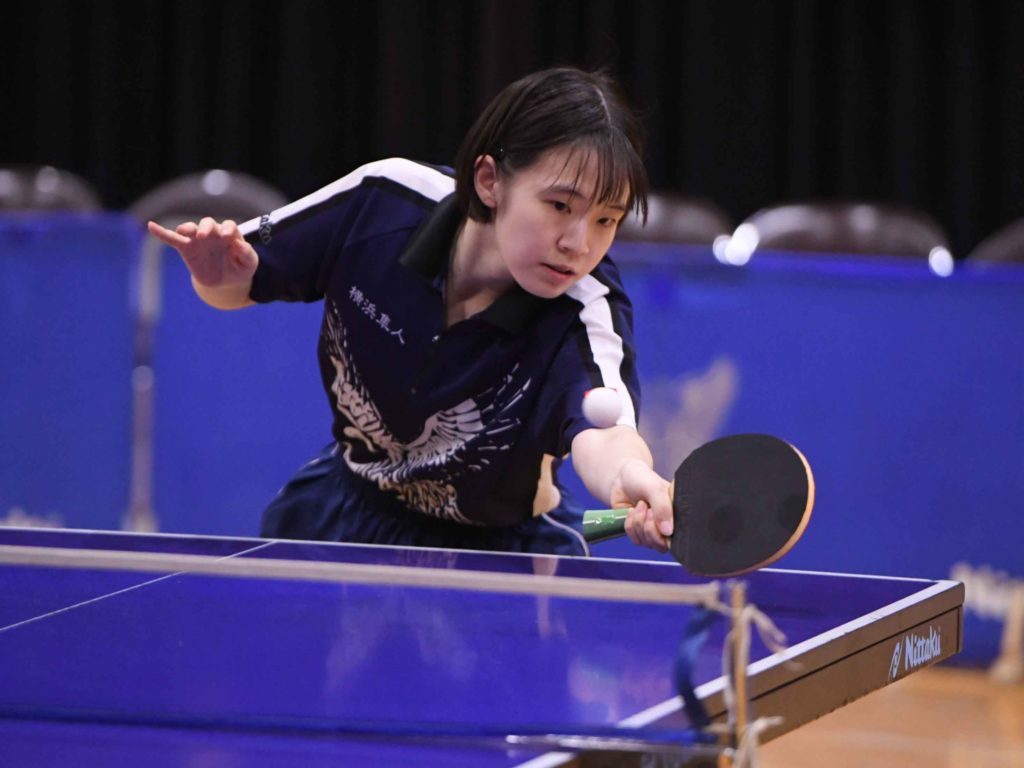
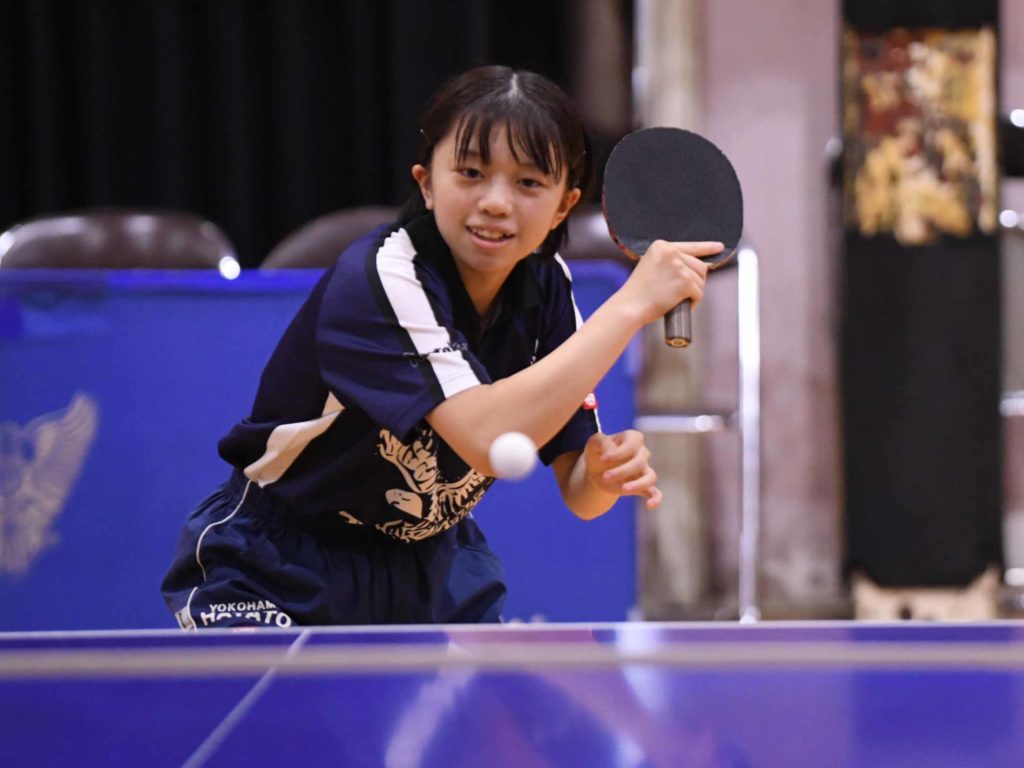
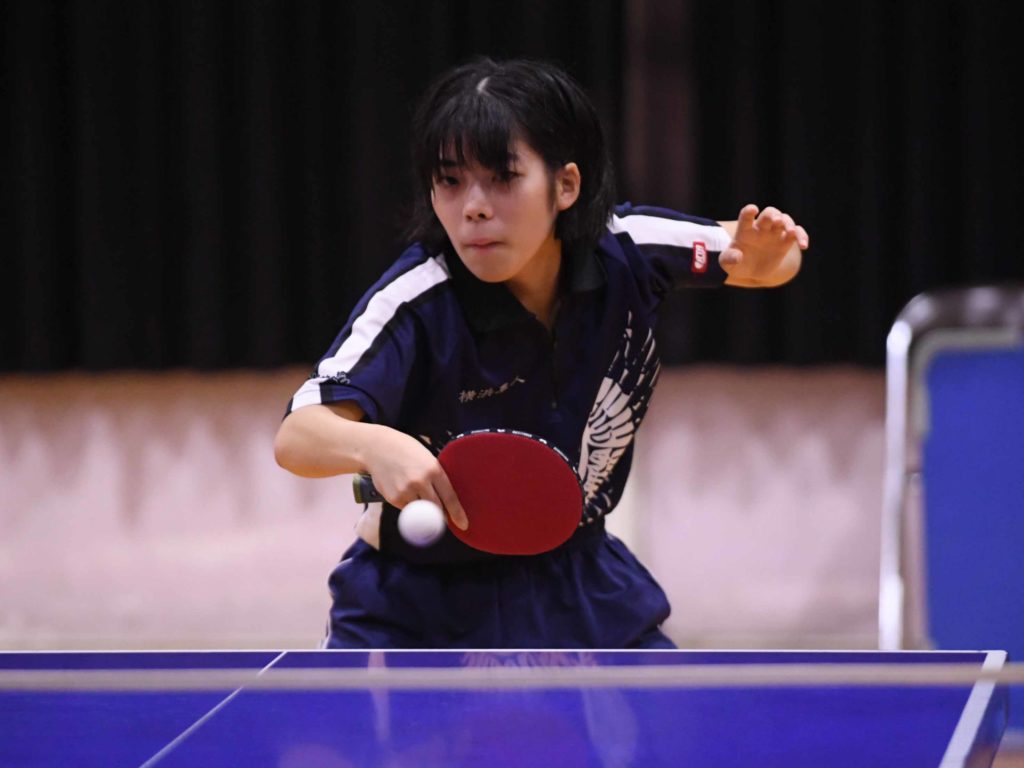
[The goal is to be a team chosen by the players]
This school year, Yokohama Hayato has 18 junior high players and 9 high school players. Many are from nearby Kanagawa or Tokyo and commute from home. A few players came from farther away, including Fukushima, Fukui, Osaka, and Miyazaki, and they live in the dormitory completed a few years ago.
Even before the dormitory existed, there were players from outside the prefecture who enrolled, but in those cases their parents also had to move to Kanagawa and live there. The dormitory has lowered the barrier to welcoming players from outside the region, but the school still does not place much emphasis on recruiting players.
“We didn’t originally have a dormitory, and we used to practice in an old gymnasium without heating or air conditioning, so it’s not as though we have some special environment or conditions. Even so, we’re competing with players who were drawn to Hayato’s style and enrolled because they wanted to play here.
People often ask, ‘Is there a cap on the number of club members?’ or ‘How much achievement do you need to join?’ But there isn’t. Rather than strong or weak, our stance is that if you understand the team’s policy and share the same ambition, then let’s work together. We don’t want to be a team that chooses players; we want to remain a team chosen by players” (Kishi).
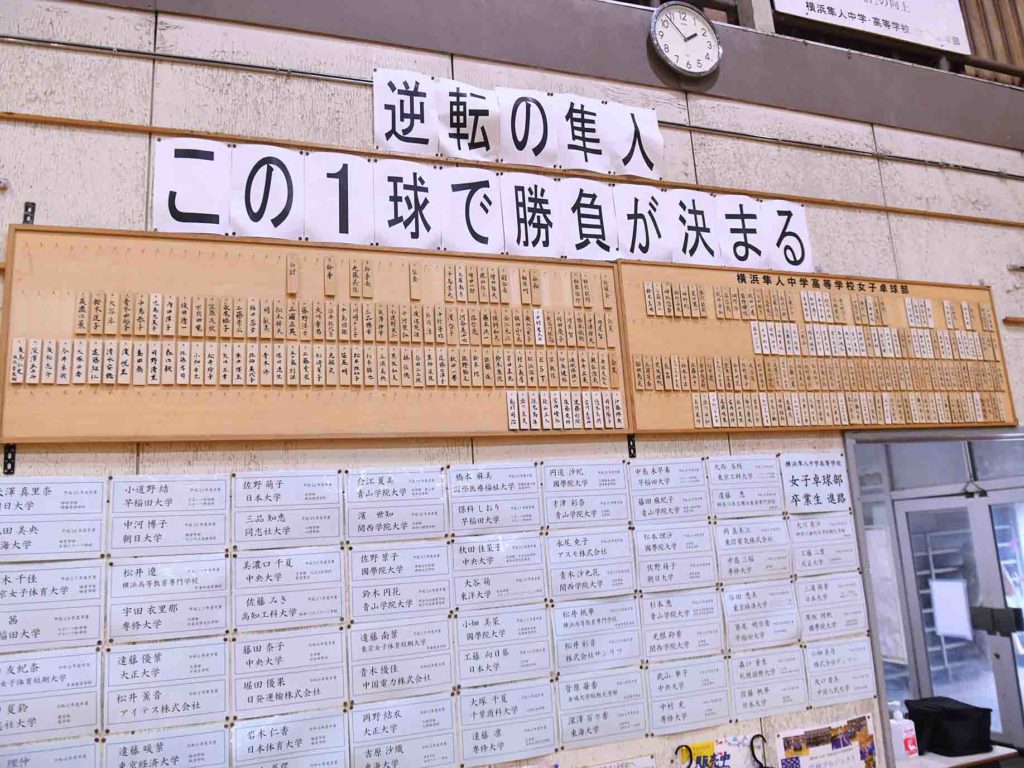
The walls of the practice hall are lined with the names of former alumni and others from past generations
[Everyone’s voice creates the mood in practice]
On weekdays, the day begins before classes with junior high students studying and high school students cleaning the campus. High school practice starts at 2:45 p.m. and junior high practice at 3:45 p.m., but reports, contact, and consultations with the advisers, as well as confirmation of the practice menu, are all taken care of during morning homeroom and lunch break so that once they arrive at the gym they can focus immediately and get into training.
Even on weekends, various checks are completed before they arrive at the gym, and practice begins at 9:30 a.m. They train until 7:45 p.m. on Saturdays and until 5:30 p.m. on Sundays. In addition, they hold an in-school training camp once a month. The aim is not only to strengthen the team, but also to deepen mutual understanding and teamwork by living and eating together.
Yokohama Hayato has club rules created by the players themselves, and they act according to those rules even during practice. And because “if you don’t practice in a good atmosphere, the quality of practice won’t improve,” everyone raises their voices from warm-up exercises through the practice sessions to create the right mood.
“What I want from the players is not just concentration versus relaxation, but rather ‘sharpness’—the ability to switch their mindset and actions quickly whenever the situation changes, such as when class ends and practice begins, or when the practice menu changes. I think that’s what leads to growth in every moment” (Kishi).
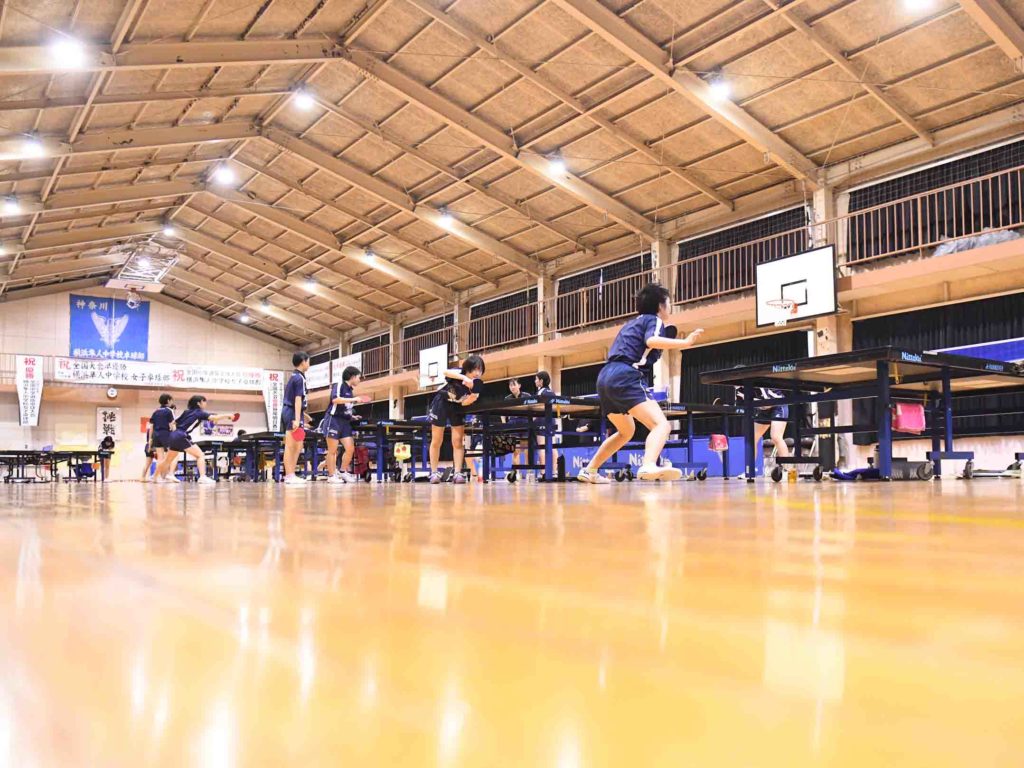
The gymnasium used for practice is also used for classes, so the tables are set up and put away every day. There is no heating or air conditioning, and in summer the room temperature can rise to nearly 40 degrees Celsius. Rooms used for the in-school training camp are also set up inside the gymnasium.
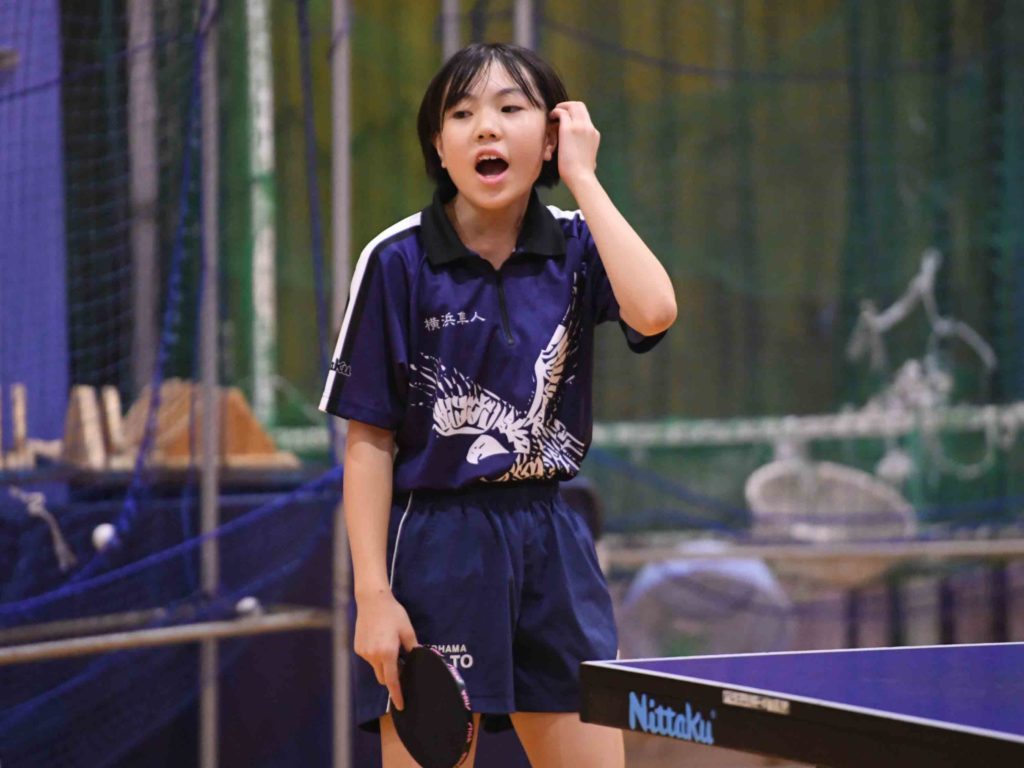
During practice, the gym rings with shouts of “Fight!” from each court and the answering “Yes!”
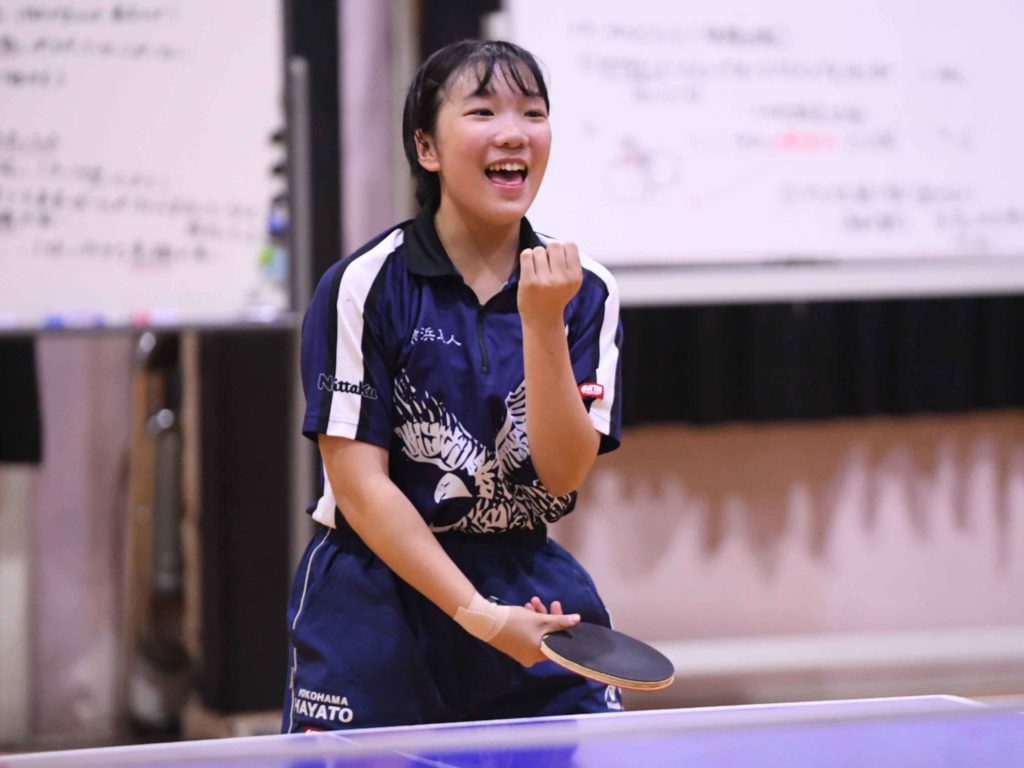
To eliminate the gap between practice and actual matches, they make a point of speaking up regularly
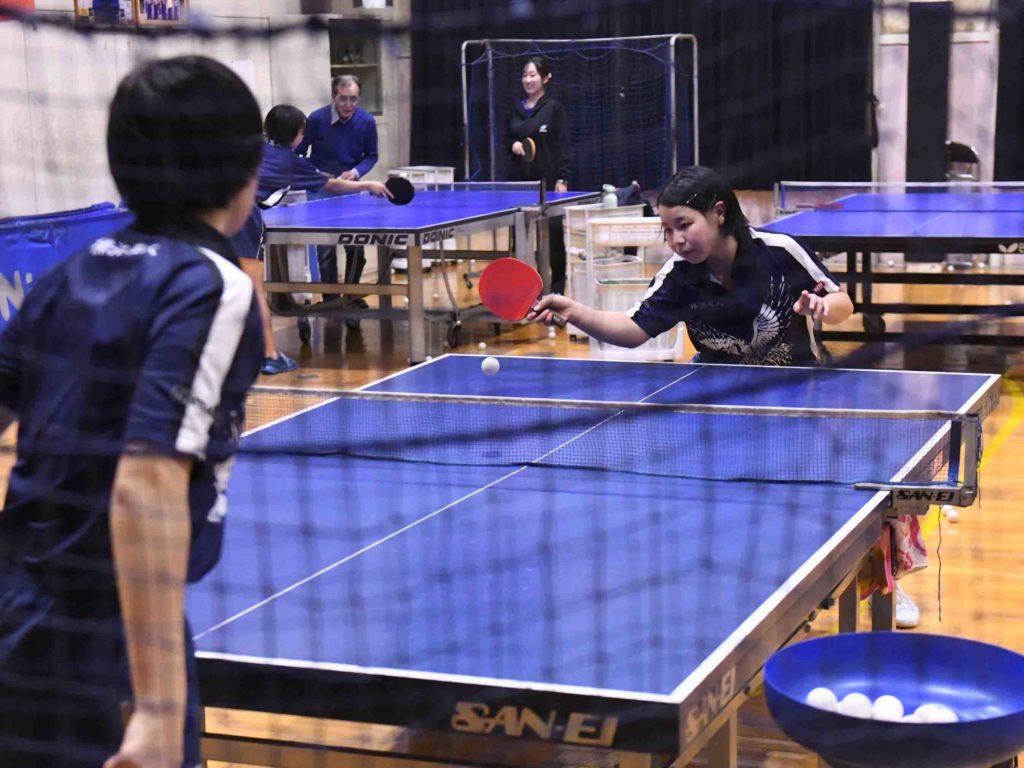
Even between game drills, they do not simply rest; each player takes the initiative and works on individual problem drills
●Continued in Part 2
Share


