



The Yokohama Hayato Junior and Senior High School girls’ table tennis club continues to compete at a high level, winning national titles in both team and singles events. We went behind the scenes of this team, which spends its青春 days aiming for “everyone’s personal best.” This is the second part, following Part 1.
● Reporting: Yoshikiyo Asano (O-KOKU Editorial Department)
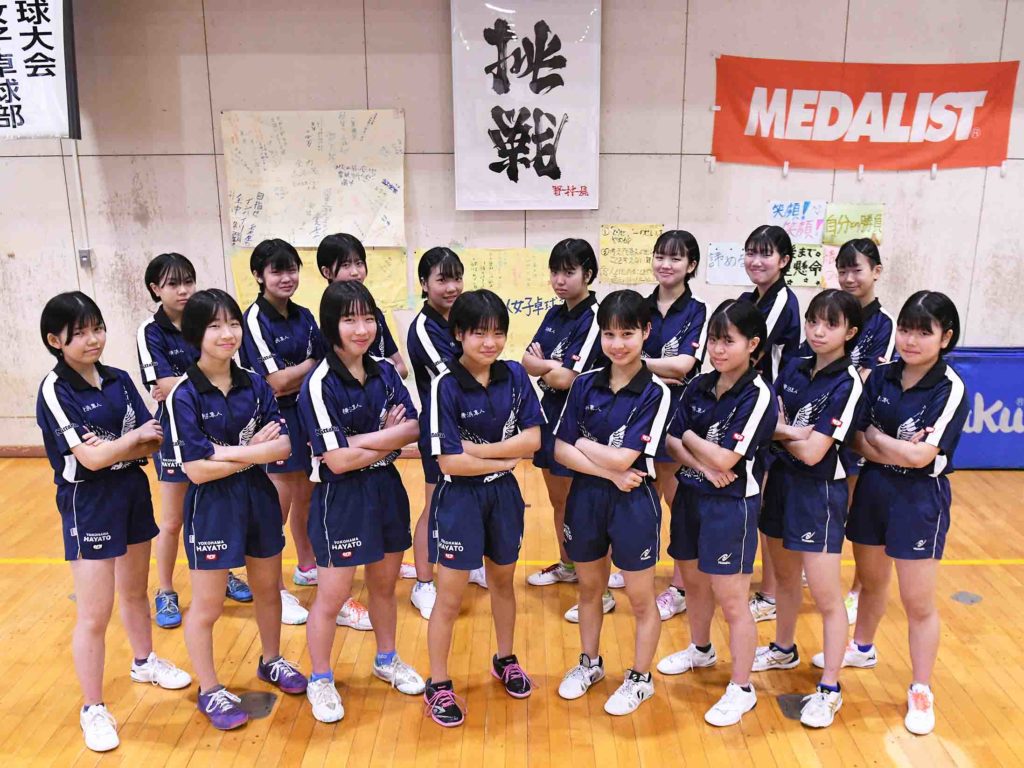
What they focus on is “fueki ryukō.” Hayato’s strengthening policy
[There are many ways to approach problem-solving. They do not force players into a mold.]
When coaching the players, what Yokohama Hayato’s staff values most is not forcing them into a mold. Depending on the period, the team works on certain skills and themes together, but when it comes to each player’s individual issues, they suggest possible solutions and leave it up to the player whether to adopt them.
“There are all kinds of ways to solve problems, so we never force anything on the players. In some cases, fitting players into a mold may make it easier to win, but our thinking is that a playing style should have the player’s initiative and will behind it” (Coach Kishi).
Even in an environment where junior high school students and high school students train together, the required level and the elements they work on differ. For the high school players, with an eye toward competing at the senior level, they receive more detailed and more complex technical and tactical instruction. For the junior high school players, the staff also tries to help them feel the joy of table tennis, not just focus on results.
In addition, among players ranging from junior high to high school level, they train with players of roughly the same level as much as possible, regardless of grade. Through work suited to each player’s level, they aim for “everyone’s personal best.”
And before high school tournaments, junior high school players serve as practice partners; before junior high school tournaments, high school players do the same. In this way, training is arranged in line with the junior high and high school tournament schedules so they can support each other. They enter tournaments with a sense of unity as one team.
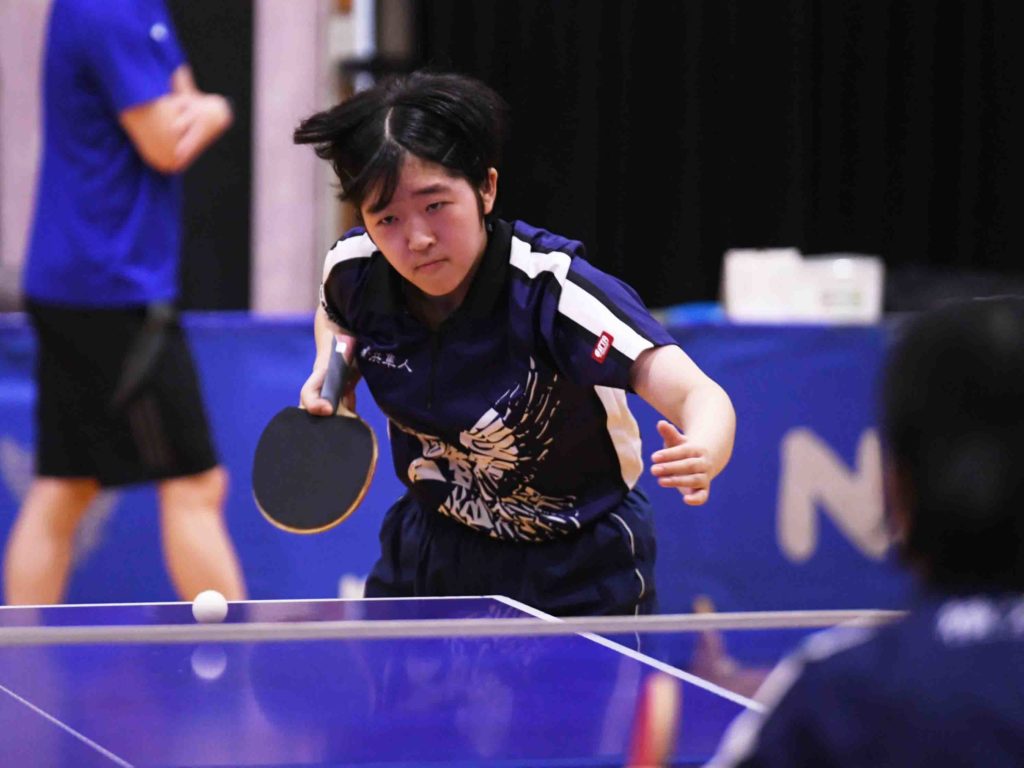
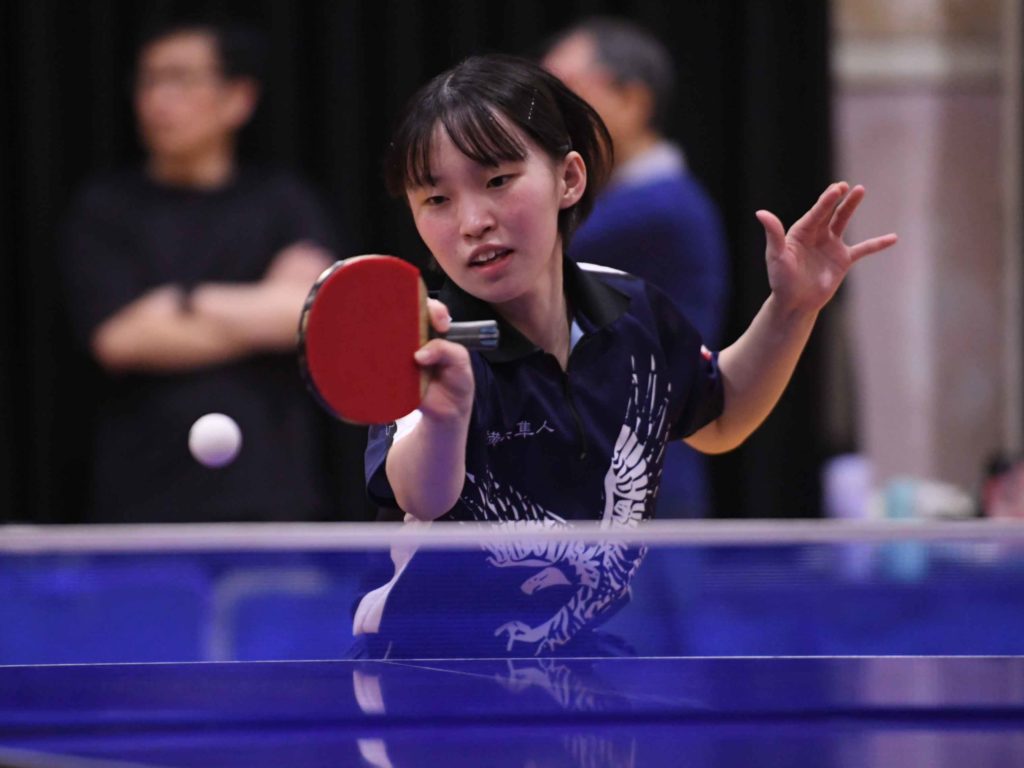
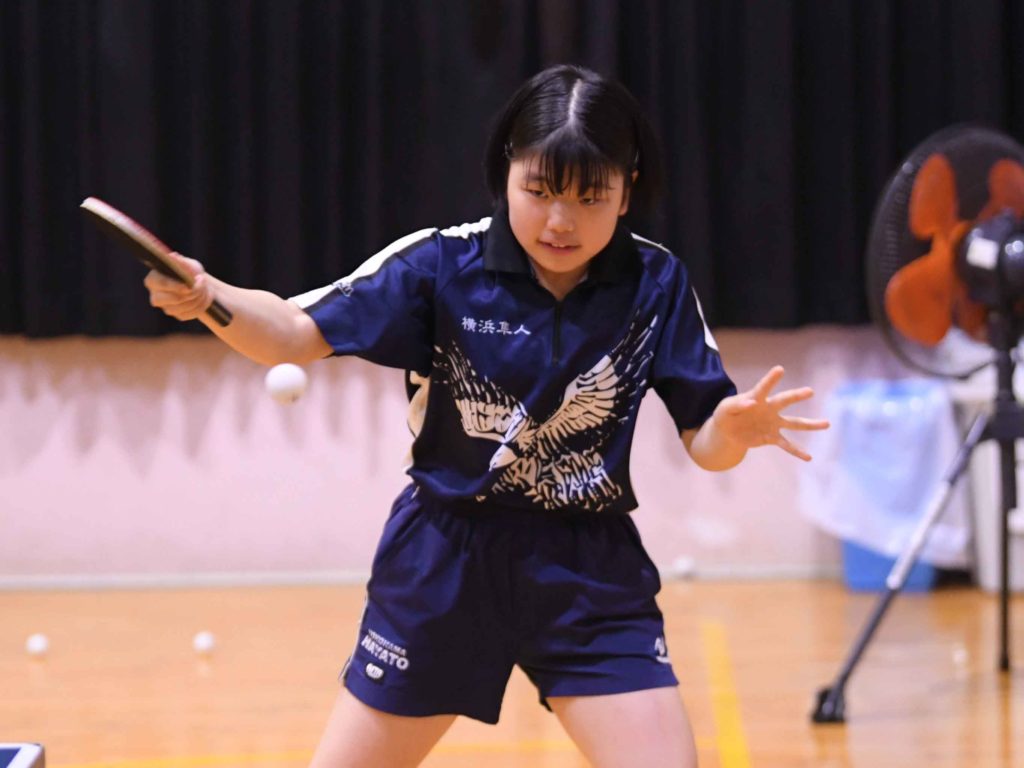
[What does not change, and what does change. The “fueki ryukō” that the staff keeps in mind]
In addition to the four advisers, the team is also supported by staff members such as full-time coach Yuzuki Abe, physical coach Hiroya Saito, mental coach Akika Okubo, and conditioning coach Mirai Miyazaki. This multi-pronged approach was fully introduced about five years ago, and they have also increased their training trips and practice matches against outside opponents compared with before.
Regarding these changes, what the staff keeps in mind is the spirit of “fueki ryukō,” a core idea in Matsuo Basho’s haikai. It means bringing new changes into an unchanging essence, while also finding the unchanging in what is constantly changing and fashionable.
“After (general manager) Mr. Kobayashi passed away, the coaches discussed keeping the team’s spirit and identity the same while taking on new challenges. We introduced serious strength and conditioning work, and we changed the practice menu as well. While judging the balance, there are still plenty of things we need to change.
What I’ve felt since bringing in strength and conditioning work and adding more staff is that the more people are involved with the team and the players, the more people there are to support us. There are so many people involved with and supporting the team in different ways, and I feel that being able to keep going like this is a really good situation” (Coach Kishi).
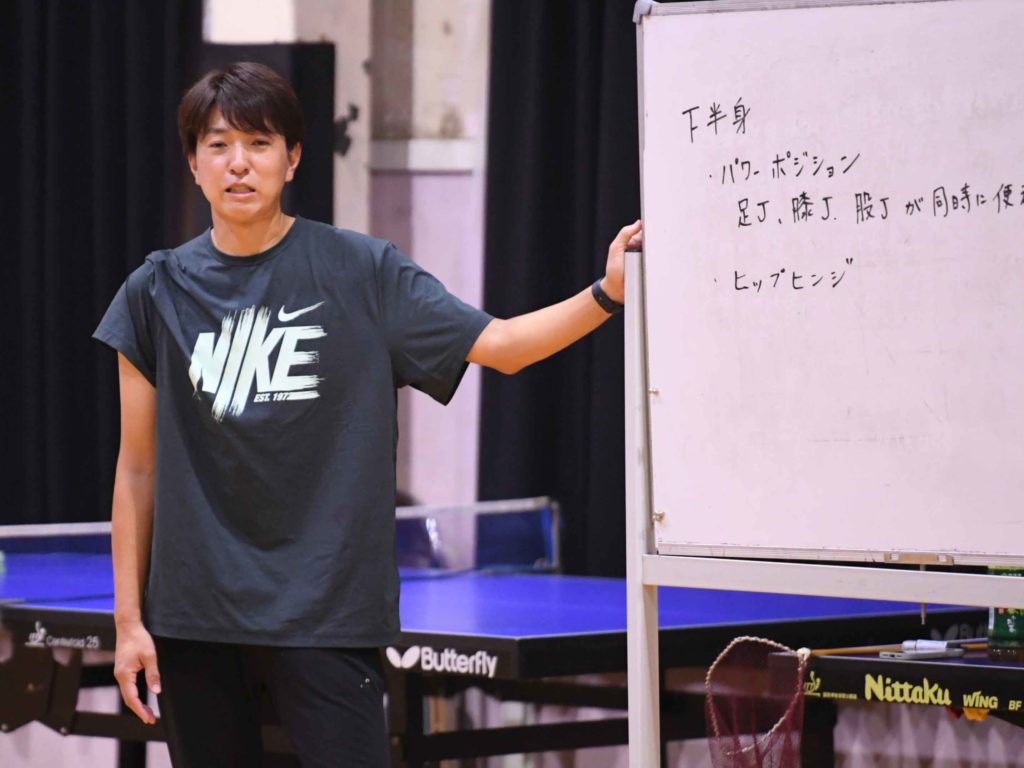
Physical coach Hiroya Saito. He also serves as a masseur for the Japan League’s Sanritsu.
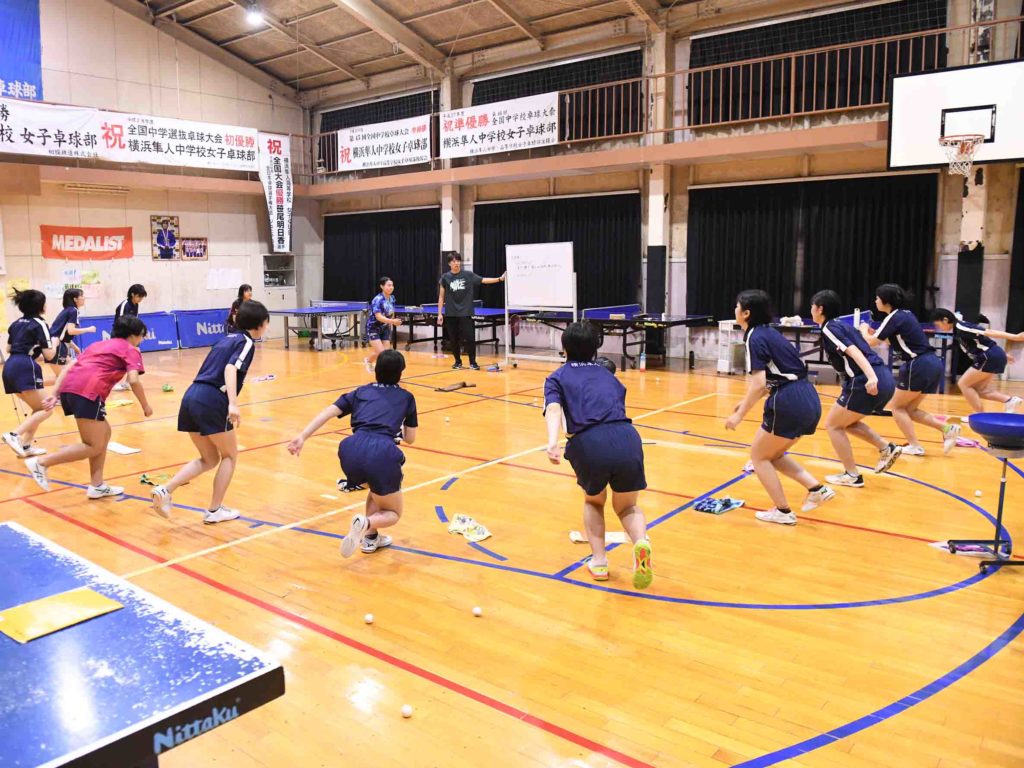
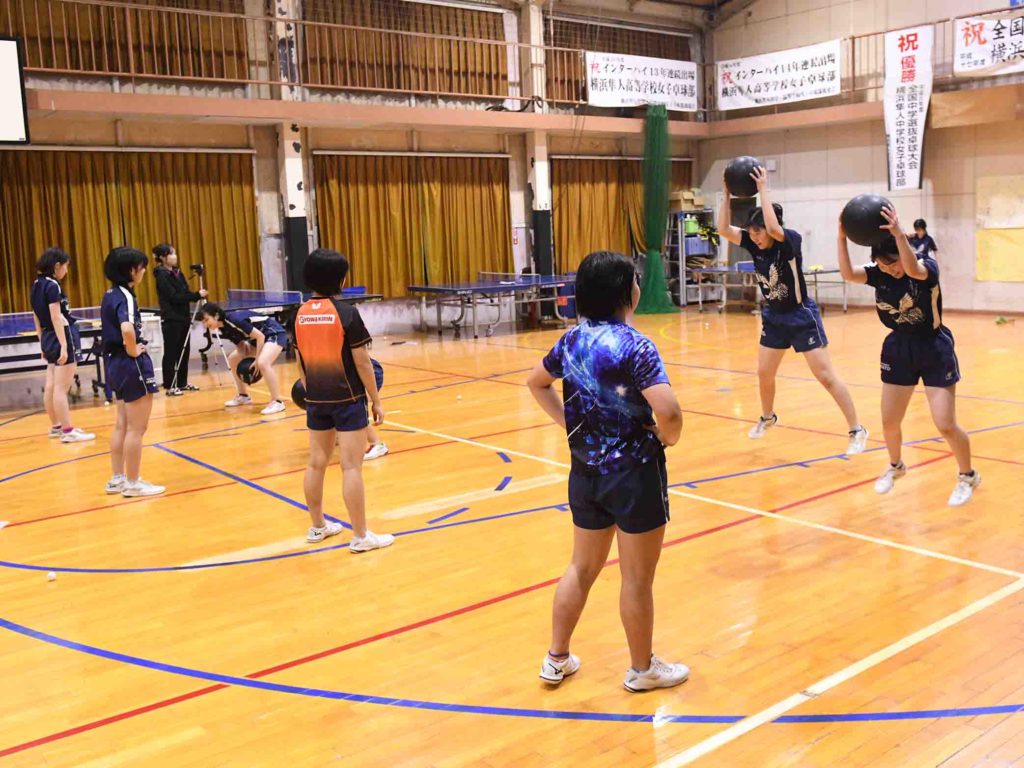
It was a training day on the day of the interview. They do various drills at the end of practice.
We asked the players!
We asked the players all kinds of things about school, table tennis, their teachers, and their future!
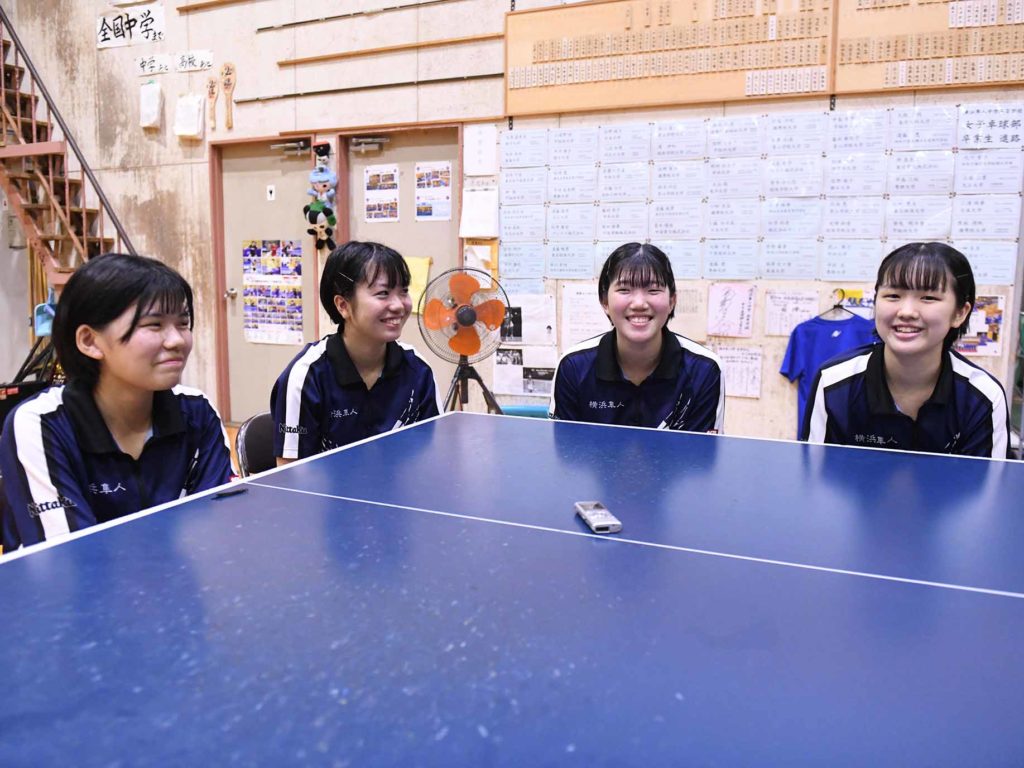
[The team’s big sisters! Third-year quartet]
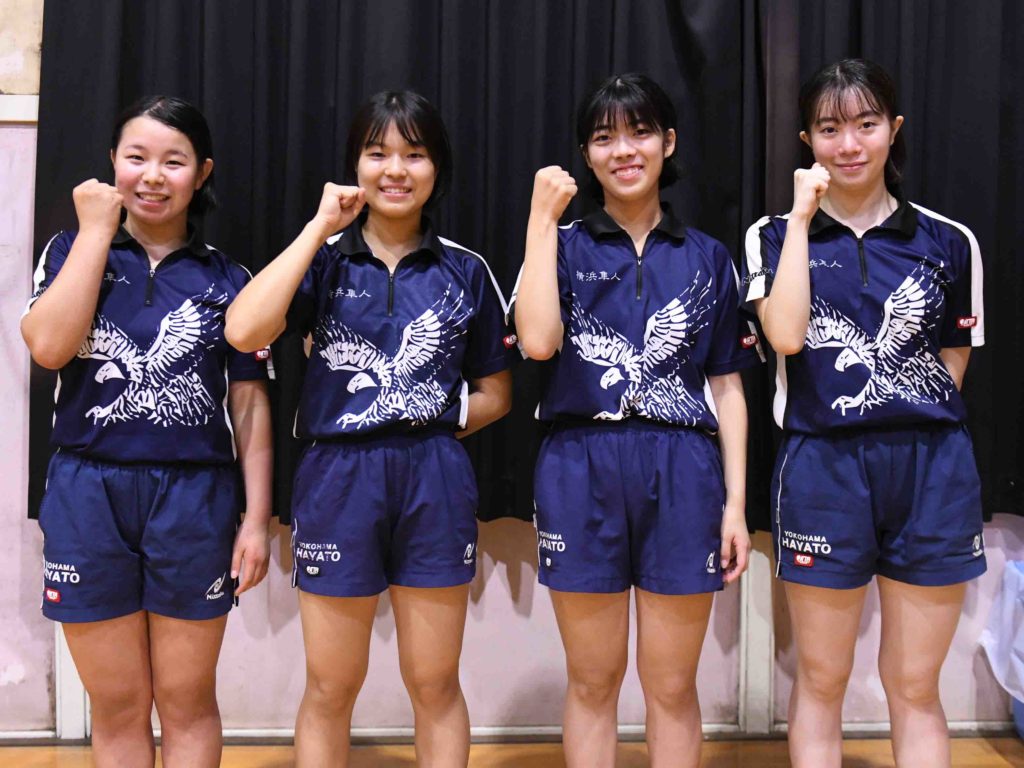
From left: Nozomi Igarashi, Arika Hiramatsu, Yume Iwaki, Riku Satō
■ Nozomi Igarashi (from Kanagawa)
Hayato has very good manners, and that’s what attracted me to it. The most memorable moment over these six years was the final Inter-High qualifier. We lost to Seisa Yokohama, but graduates and parents from junior high school also came to cheer us on, and we were able to play amid support that felt unlike anything you’d expect at a prefectural tournament. My dream for the future is... to be a full-time housewife haha.
■ Arika Hiramatsu (from Tokyo)
When I visited Hayato as an elementary school student, I was impressed by how good the atmosphere was. The seniors and juniors all get along well, and it’s fun. In the future, I want to become a registered dietitian who can give nutrition guidance to athletes. I also want to become the kind of person my respected senior, Hinayama (Natsumi / graduated in 2024, Toyo University), is.
■ Yume Iwaki (from Kanagawa)
My older sister (Nika / graduated in 2024, Nippon Sport Science University) also attended Hayato, and when I heard that “practice is long, but everyone can work hard together,” I decided to enroll. To be honest, I wasn’t able to play many matches and contribute much at Hayato, so I want to make up for that in college.
■ Riku Satō (from Fukushima)
I stayed in my hometown until junior high school, then joined Hayato for high school. When I went to watch my older brother and sister play their high school matches, I saw Hayato’s cheering section and thought, “I want to be here.” That’s what led me to join. For the final Inter-High qualifier, we had spent months aiming for a spot in the school team event, and although we lost, we fought all the way to the end in true Hayato style.
[Congratulations on winning both spring and summer! Third-year junior high quartet]
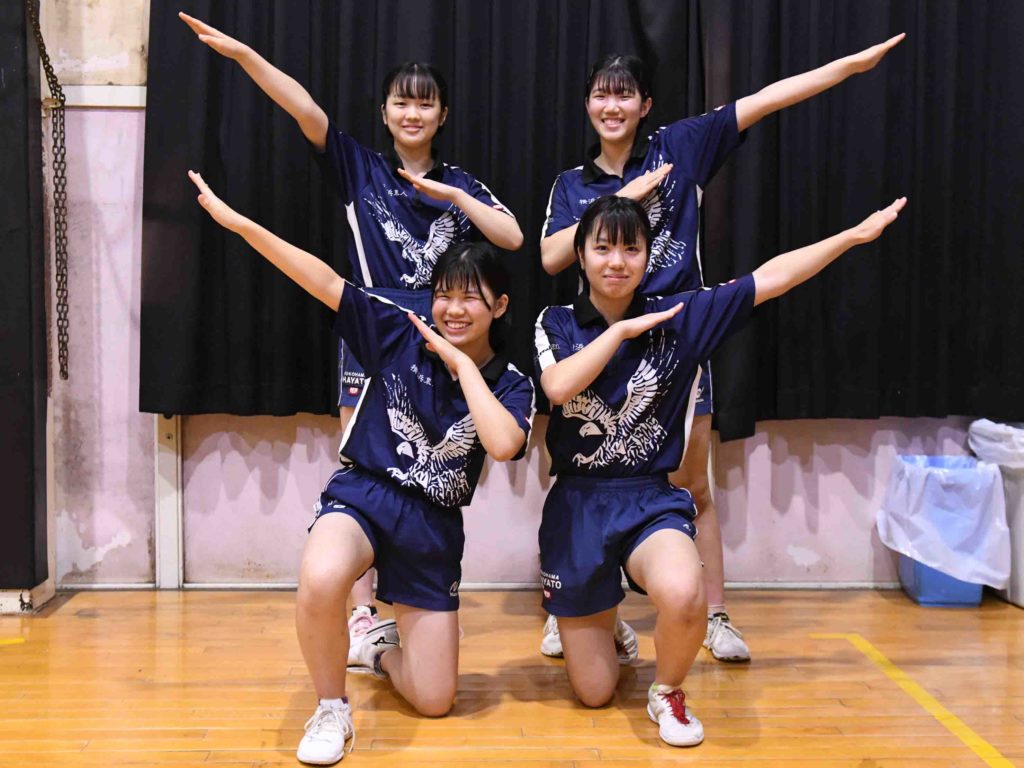
Clockwise from top left: Nanami Baba, Yuzu Miyata, Kisen Okada, Mao Yoneyama
■ Nanami Baba (from Kanagawa)
I can really feel the junior high school selection win, but with the All-Japan Junior High School Championships, I still don’t feel like we really won it at all haha. When I was in elementary school, I practiced alone at a club, so I longed for team competition, and I enrolled because I wanted to become No. 1 in Japan at Hayato, so I was really happy. After joining Hayato, I made teammates and I think I grew as a person too.
■ Yuzu Miyata (from Miyazaki)
I decided to go to Hayato because I admired Igarashi-senpai. There are tough moments too, but everyone is cheerful, and I think that pulled me along and made my own personality more cheerful too. I think that cheerfulness is what helped us win both the junior high school selection and the All-Japan Junior High School Championships.
■ Kisen Okada (from Kanagawa)
I chose Hayato because I wanted to work hard together with Igarashi-senpai, who came from the same club and whom I admired for being strong and kind. Since enrolling, life has been so fulfilling that three years flew by in no time. Teacher Kishi and Teacher Nakama are both passionate and really care about their students.
■ Mao Yoneyama (from Kanagawa)
Teacher Nakama tells jokes and is always funny. Teacher Kishi also teaches technical and tactical details very carefully. I wasn’t able to play in either the junior high school selection or the All-Japan Junior High School Championships, but I was happy that the three classmates who were on the team worked hard and won the title. I’ll work hard in high school too so I don’t lose to my seniors or classmates!
Summary: Hayato’s unwavering conviction and pride. Spring and summer titles won as a team
Coach Kishi also says that Yokohama Hayato’s identity of “growing as a team” and “everyday life is all part of growth” may seem old-fashioned, or perhaps not very modern.
Still, by staying true to that identity, the junior high school team won both the selection tournament and the All-Japan Junior High School Championships. Among the title-winning members, only one finished in the top 16 in the All-Japan Junior High School Singles. Looking back even to their elementary school days, only one had ever placed in the All-Japan Hopes, Cubs, or Bambie divisions before (top 8 or better). This was truly a spring-and-summer double crown won by growing as a team and winning as a team.
With unshakable conviction and pride in an age with no single right answer, they will continue walking the “club path” of Yokohama Hayato.
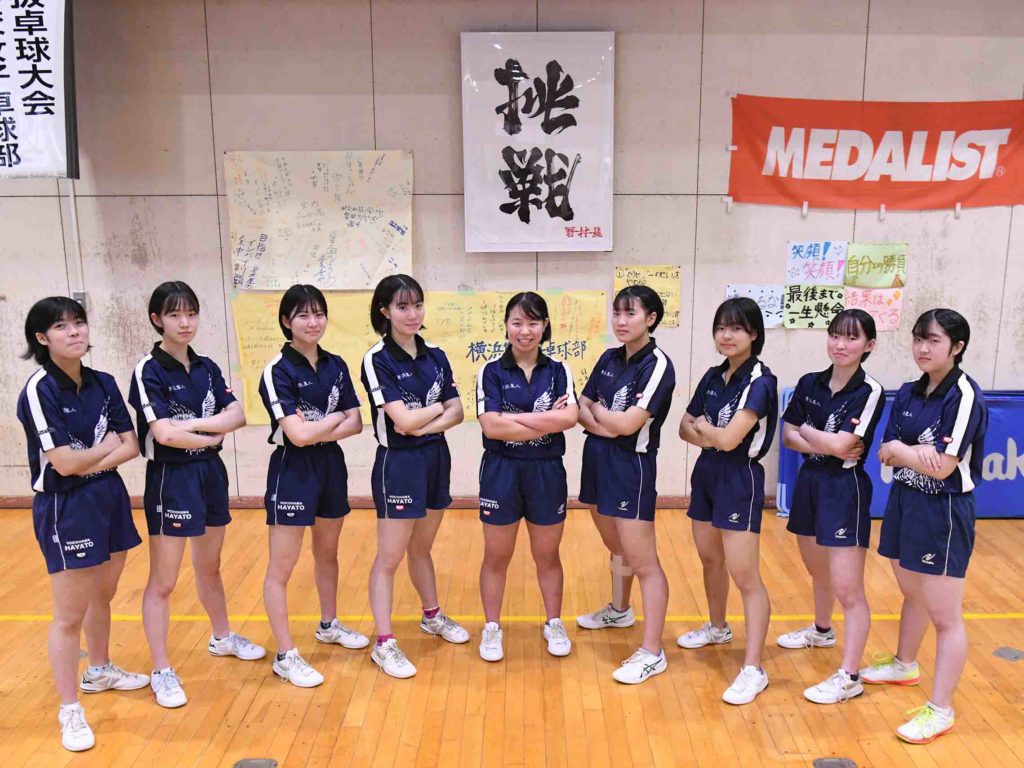
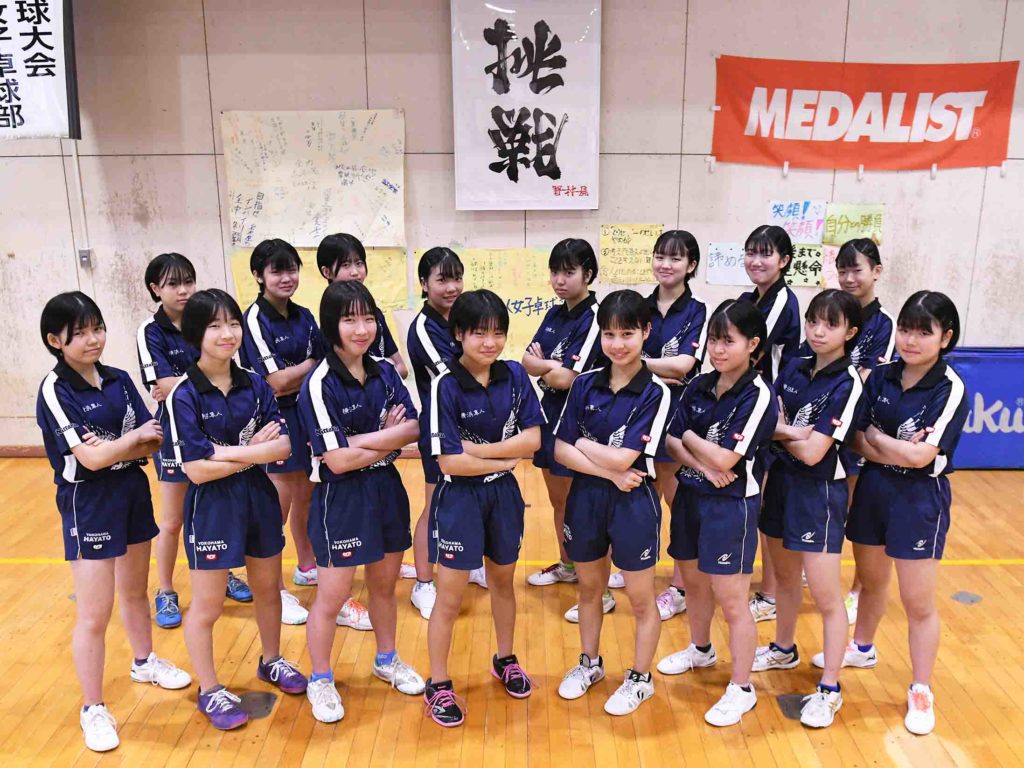
Share


